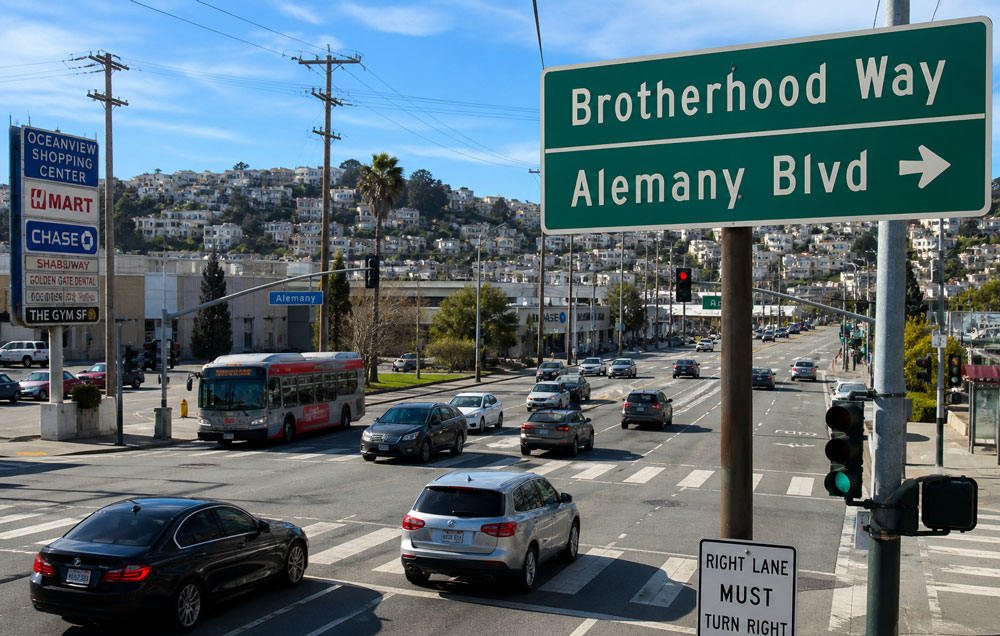
Residents say SFCTA’s Brotherhood Way plan raises big questions about traffic, spending and who City Hall is really planning for.
Sparks Fly Over SFCTA’s Brotherhood Way Plan — Especially Traffic Lanes, Project Priorities
• • • • • • • May 2026 • • • • • • •

Neighborhood residents question Alemany Boulevard lane reductions, a proposed bridge and whether the plan reflects local priorities.
Presentation Limits Public Input, Raises Process Questions
On April 13, 2026, the San Francisco County Transportation Authority (SCTA) presented proposed solutions for the Brotherhood Way Safety and Circulation Plan to residents of the Merced Extension Triangle neighborhood. Senior Planner David Long delivered the presentation. No public questions were permitted following the presentation.
Some attendees said the format did not include a public question-and-answer period after the design presentation and raised concerns about how the agency developed its conclusions. Several residents said some proposed elements had not been previously requested by the neighborhood.
Coordination With City Agencies and Advocacy Groups Draws Attention
The plan reflects coordination among the SFCTA, the San Francisco Municipal Transportation Agency and transportation advocacy organizations, including the San Francisco Bicycle Coalition. Some residents said the proposals differed from previously expressed neighborhood preferences, while regional transit systems such as Muni and BART continue to face funding challenges.
Residents also raised questions about the role of advocacy organizations in shaping transportation priorities, including citywide bicycle and pedestrian infrastructure planning.
Community Wins: Four Lanes Preserved, Environmental Features Added
One design outcome supported by residents is the decision to keep Brotherhood Way as a four-lane roadway. Residents had argued that Brotherhood Way is a key east-west route serving Parkmerced, Stonestown and the broader west side of San Francisco.
The SFCTA also acknowledged neighborhood requests to allow a left turn from Alemany Boulevard north to Orizaba Avenue. However, residents said the proposed implementation appears tied to a future traffic signal, rather than the quick-build project now being designed by SFMTA.
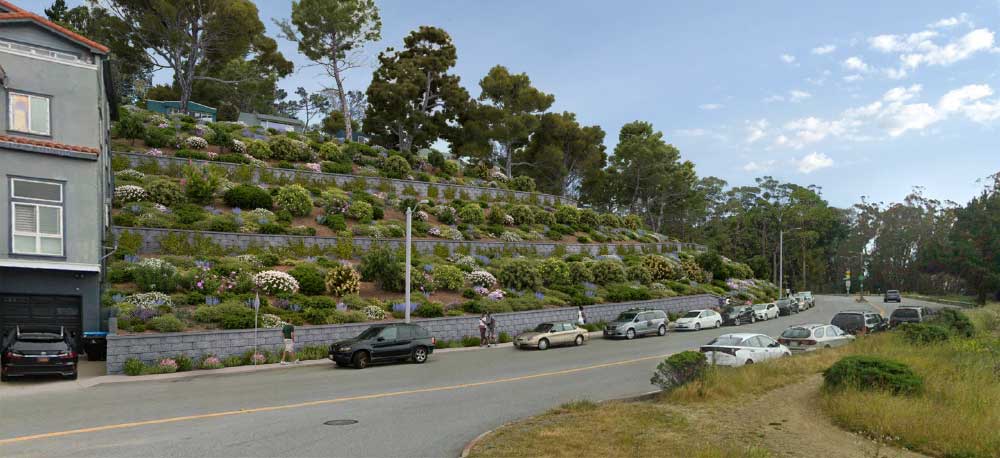
Some members of the neighborhood believe a “rain garden” to support groundwater recharge is appropriate.e. The area historically included Stanley Creek before Brotherhood Way was constructed. Residents said rain gardens could add a meaningful green infrastructure element along the corridor.
Alemany Boulevard Lane Reduction Emerges as Central Dispute
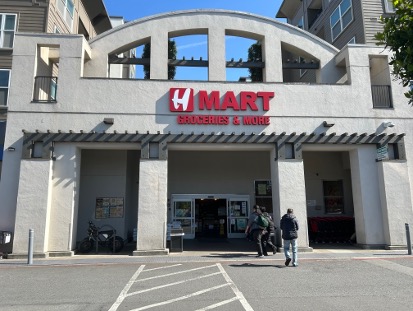
The proposed reduction of Alemany Boulevard to one lane in each direction remains a major point of disagreement. Residents and business stakeholders said reduced traffic capacity may affect access to the Oceanview Shopping Center, including H-Mart and other retailers that rely on customers traveling by car from across the city.
Residents said the shopping center has become a successful regional retail destination after years of tenant turnover and vacancies. They argued that maintaining Alemany Boulevard as a four-lane roadway is important to the area’s economic stability.
The San Francisco Bicycle Coalition has cited a 2025 fatal crash involving Juan Paz at Naglee Avenue and Alemany Boulevard as part of its safety argument for reducing lanes. Residents noted that the crash occurred in the Mission District, roughly a mile and a half away, where roadway conditions differ from those near the Merced Extension Triangle.
Proposed Pedestrian Bridge Adds Cost, Faces Limited Local Support
The design alternatives also include a proposed pedestrian and bicycle bridge connecting St. Charles Avenue and 19th Avenue. Residents said the bridge was not part of prior neighborhood requests. The project has been estimated at approximately $10 million.
Some residents questioned whether the bridge should be prioritized while transit agencies continue to face operating budget pressures.
Design Alternatives Offer Tradeoffs in Traffic Flow and Safety
Sketch Alternative A
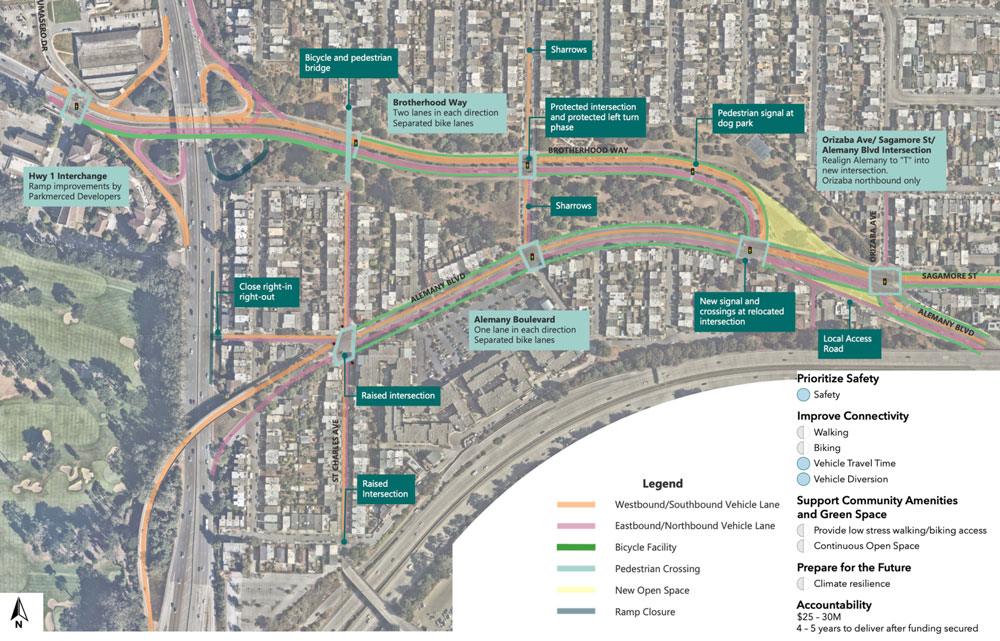
Sketch Alternative A includes a right-turn configuration from Sagamore Street onto Brotherhood Way, intended to slow traffic and make the transition safer near Orizaba Avenue. Some residents questioned the need for the design, particularly given uncertainty about the future location of the planned Oceanview library.
Residents said Brotherhood Way remains one of the most efficient routes to the west side and warned that a new bottleneck could create additional traffic pressure.
Alternative B
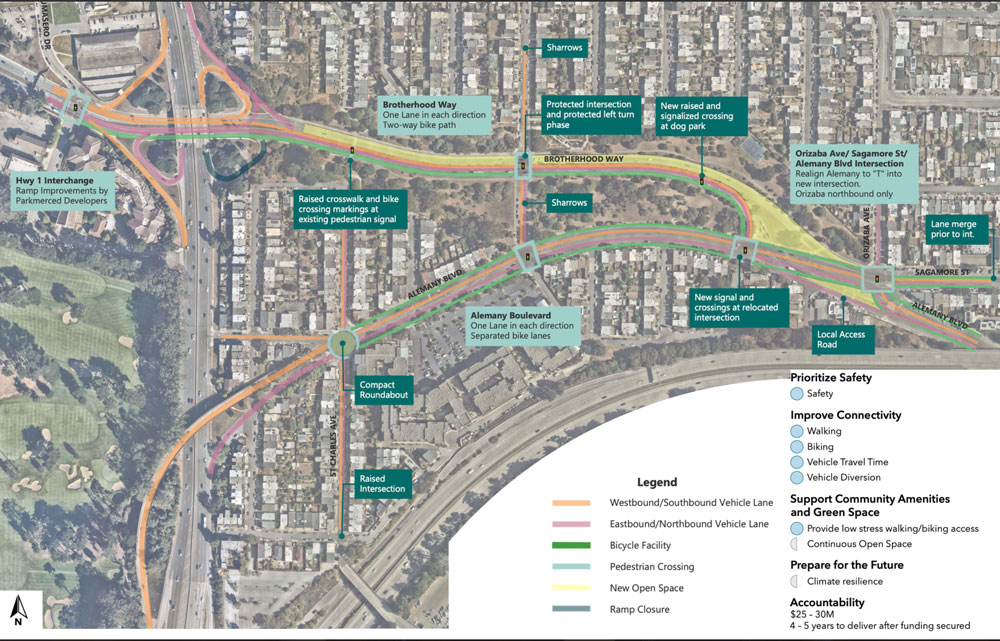
Alternative B no longer includes reducing Brotherhood Way from four lanes to two lanes. The alternative includes a raised crosswalk at Alemany Boulevard and St. Charles Avenue, where residents said vehicles sometimes exit at speeds too high for neighborhood traffic.
The alternative also includes rain garden features. Some residents said those environmental improvements could be added within the existing Brotherhood Way street layout.
Alternative C
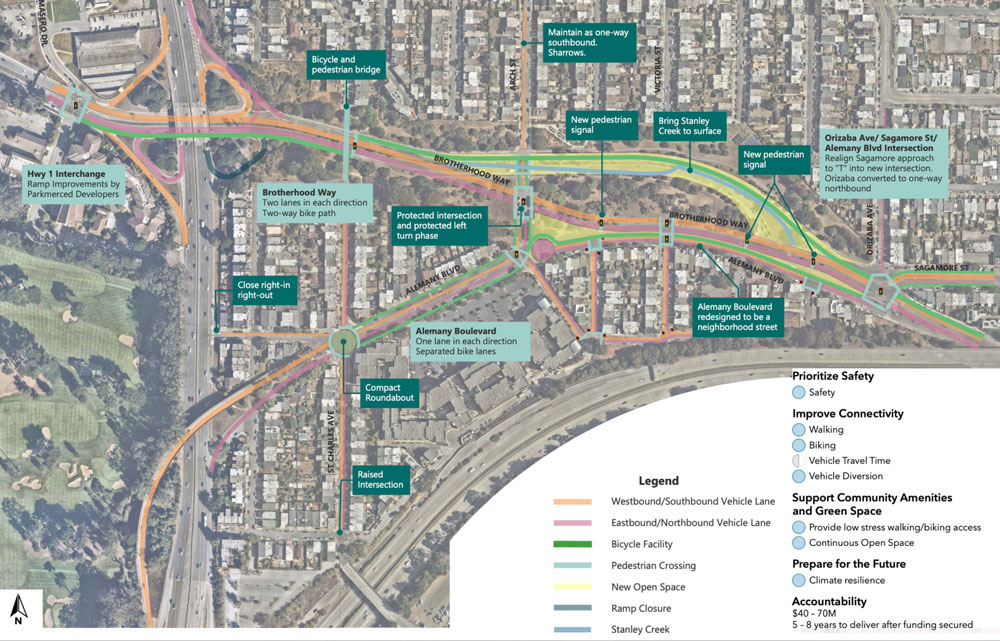
Sketch Alternative C, which included bringing Stanley Creek to the surface, has been tabled and is no longer under consideration. Residents said the proposal raised maintenance questions because the Merced Extension Triangle neighborhood already helps care for some nearby green spaces.
Residents said improvements to the Alemany Boulevard median could still be worthwhile, particularly since landscaping is absent in all medians.
Advocacy Funding and Contracts Provide Broader Context
Financial disclosures indicate that the San Francisco Bicycle Coalition typically generates between approximately $1.1 million and $2.5 million in annual revenue. A portion of that revenue comes from program service contracts connected to city agencies, including SFMTA and SFCTA.
Those contracts are generally tied to specific services such as bicycle safety education, Safe Routes to School programs, outreach, surveys, driver training and event support.
The organization also advocates for capital spending on bicycle and pedestrian infrastructure. In February 2026, the coalition supported preserving $23 million in SFMTA Capital Improvement Program funding for bike and rolling infrastructure and backed the allocation of $12.5 million in Prop L funds at an SFCTA meeting.
Governance Changes Could Reshape Advisory Input
A separate Streamlining Task Force has recommended removing the Bicycle Advisory Committee. The recommendation is part of a broader discussion about San Francisco’s advisory bodies and city governance structure.
Next Steps: Plan Continues to Evolve Amid Ongoing Debate
All current design alternatives include a pedestrian and bicycle bridge component across Brotherhood Way. The plan remains under development as agencies consider transportation safety, neighborhood access and infrastructure investment priorities.
For residents of the Merced Extension Triangle, the key issues remain unchanged: preserving traffic flow, protecting local business access, improving safety and ensuring that final design decisions reflect neighborhood needs.
A previous article about the plans is also available HERE.
Glenn Rogers, RLA, Former President, Coalition for San Francisco Neighborhoods (CSFN) Landscape Architect, License 3223
May 2026