Massive Service Cuts Could Trigger Economic, Social, and Environmental Breakdown Across the Bay Area
Save MUNI or Watch San Francisco Collapse
• • • • • • • March 2026 • • • • • • •

Iusually agree with George Wooding’s articles 100%. That’s why his recent commentary, Once the City Finds a Way to Take Your Money, They Will Never Stop raised my concerns. While my colleague may not have intended, to leave the question hanging, he does not explicitly ask the reader to support legislation to save MUNI and BART; rather, it implies support in a somewhat half-hearted manner.
Transportation advocates and city planners are grappling with what some describe as a “doomsday” scenario. The collapse of MUNI and BART would not simply be a transit issue; it would represent a systemic failure of the Bay Area’s social and economic infrastructure.
The Economic & Cultural Fallout
Loss of “World-Class” Status
Transit is the circulatory system of a major city. Without it, San Francisco loses the density and accessibility that define a global hub. Tourism—which depends on the ability to move easily from Fisherman’s Wharf to the Mission—would likely shift to cities with more reliable transportation systems.
Event Infrastructure
Large-scale events such as the 2026 World Cup or future Super Bowls require massive logistical coordination. If BART and MUNI cannot efficiently move 50,000 or more people, the region becomes a liability for event organizers.
The Death of Downtown
Although we have seen a modest “return to office,” that recovery depends heavily on reliable last-mile transit connections. If commuting becomes a gridlocked nightmare, businesses may reconsider whether to maintain costly San Francisco leases.
The Social & Labor Impact
The “Transit Desert” for Working Residents
This may be the most immediate crisis. Low-wage workers are statistically the most dependent on public transportation. If stations close, we are effectively removing their ability to access employment.
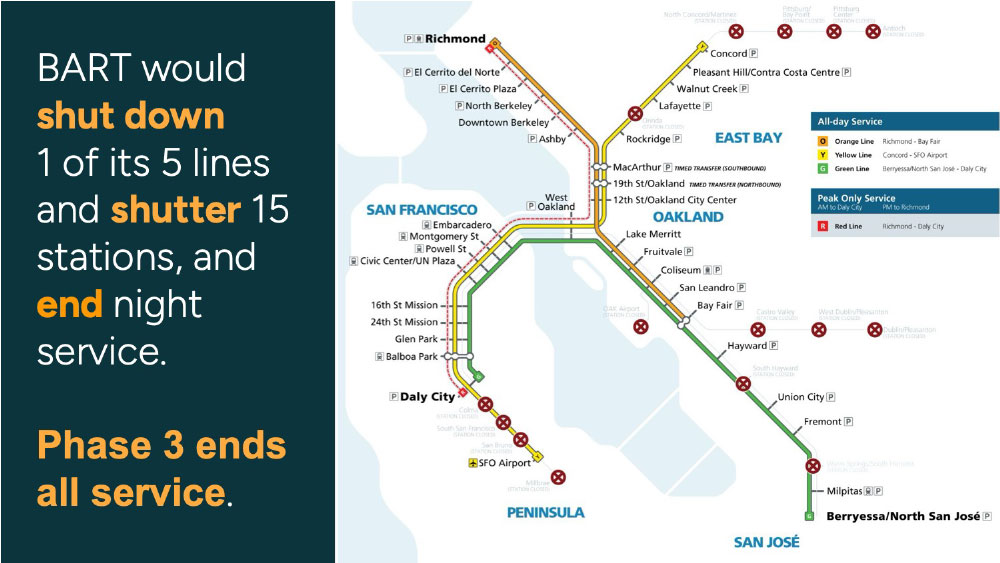
Current projections suggest a potential 50% cut in service. Approximately 20 routes could be eliminated, service frequency could be reduced by half, and late-night service could end at 9:00 pm. In addition, BART service would be reduced dramatically, and up to 15 stations could close. Caltrain may reduce service to one train per hour and eliminate weekend service, according to Cyrus Hall, a Commute Bay Area advocate.
Further illustrating the impact: approximately 30% of San Francisco households lack a vehicle. In neighborhoods such as the Tenderloin and Chinatown, that figure rises significantly, with some precincts reporting as many as 90% of households without access to a car.
Restaurant Industry Collapse
The hospitality industry is already operating on thin margins. If line cooks, servers, and dishwashers—many of whom live in more affordable areas served by BART—cannot commute into the city, San Francisco’s reputation as a “foodie capital” would suffer because the labor force would be physically cut off.
Environmental Degradation
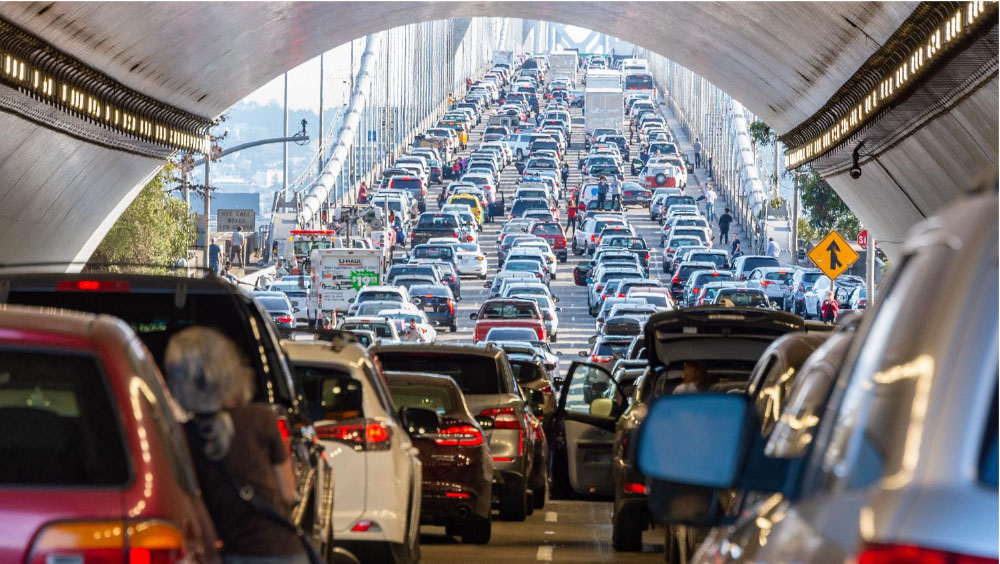
If even a fraction of transit riders shift to cars, the resulting gridlock would increase carbon emissions and make travel times—especially for emergency services—unmanageable.
Bay Bridge Congestion
The Bay Bridge, already operating at approximately 95% capacity, would face even heavier commuter traffic. This would mean more time spent driving and less time with family, potentially adding an average of 12 hours per week in traffic delays, according to Commute Bay Area advocate Cyrus Hall.
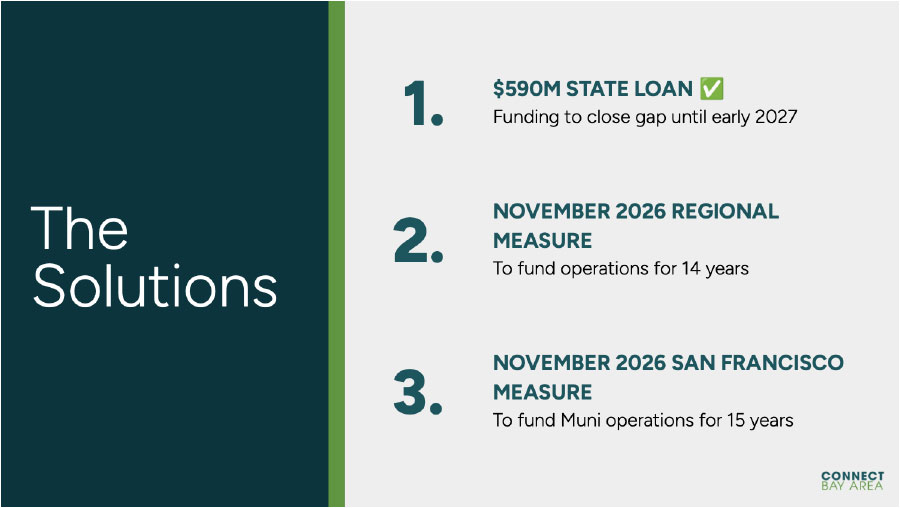
The Solution
This requires stable, long-term funding rather than temporary budget patches.
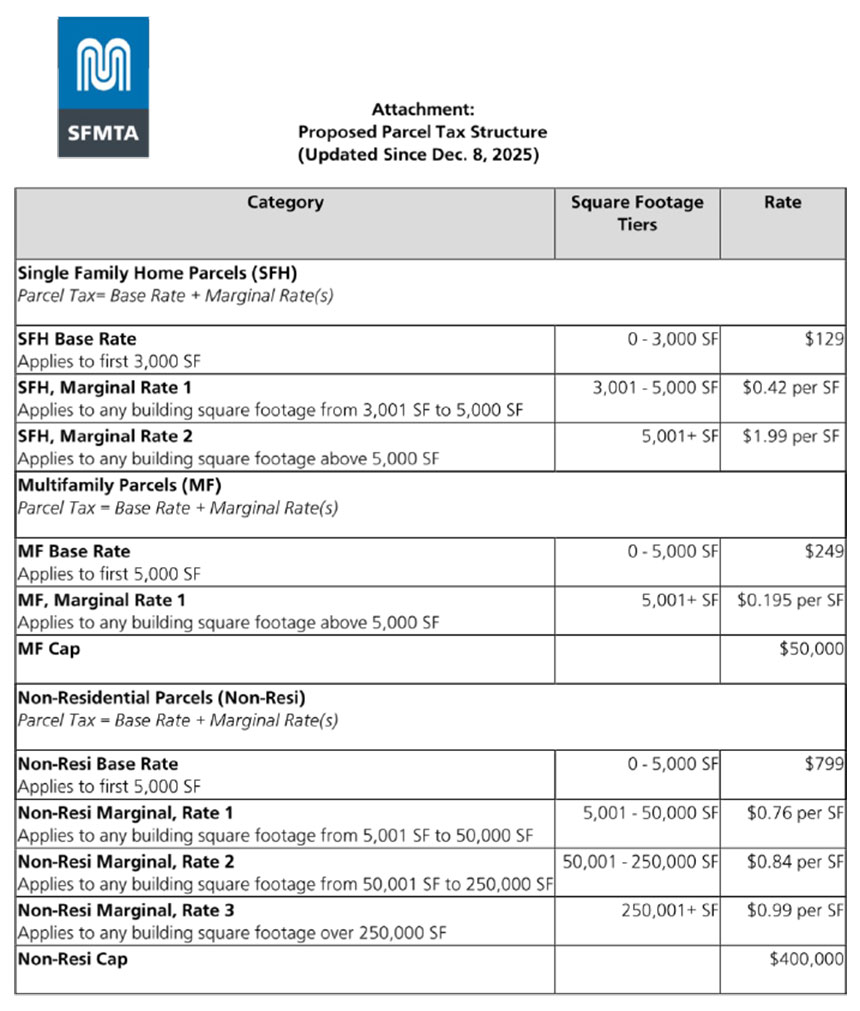
The “Death Spiral” Effect
Economists often describe this dynamic as the “Transit Death Spiral”:
- Budget shortfalls lead to service cuts.
- Service cuts reduce reliability.
- Ridership declines as people seek alternatives.
- Revenue continues to fall, triggering additional cuts.
Breaking this cycle requires legislative intervention—specifically, shifting from a farebox-dependent model to one that treats public transportation as an essential public service.
Other Transportation Payment Solutions
New Fare Payment Methods: Today, iPhone apps can pay for fares for BART and may be used to pay for MUNI too. Also, in Europe vendors are able to accept payment by debit card for transportation fares. Why not San Francisco?
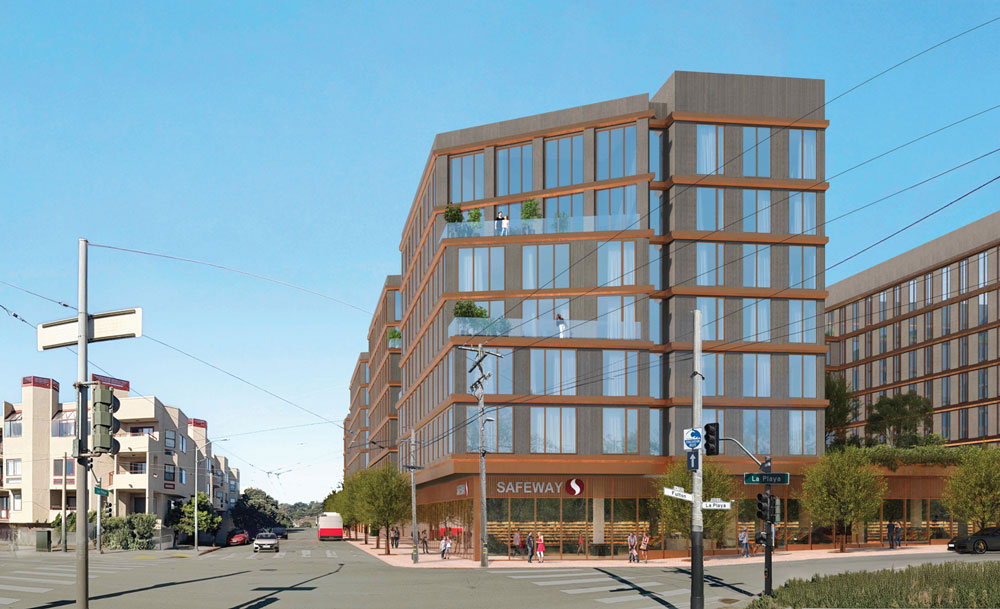
Transit-Oriented Development: BART is increasingly acting as a landlord by leasing its parking lots to developers for housing, which creates a steady stream of lease income.
Bridge Toll Increases: Bay Area bridge tolls are already scheduled to increase by 50 cents per year starting January 1, 2026, through 2030, with much of that revenue earmarked for transit and bridge maintenance.
State Gas Tax: The last gas tax increase raised in 2025 only compensated for inflation. Since this tax is paid for by more wealthy residents, this tax increase is more fair than the regressive Sales Tax suggested by the State.
Public transportation must remain financially stable if San Francisco is to remain economically viable.
Glenn Rogers, RLA,
Former President, Coalition for San Francisco Neighborhoods (CSFN)
Landscape Architect, License 3223
March 2026