Streamlining Task Force Wraps Up — But who elected SPUR?
Restructuring City Commissions Derails to Unchartered Territory
Wholesale Destruction of San Francisco’s Checks and Balances.
Of the Initial 43 Boards and Commissions in the City Charter, 26 May Be Chopped, Leaving Just 15 in the Charter.

Monette-Shaw
• • • • • • • • • • December 2025 • • • • • • • • • •
The "Commission Streamlining Task Force," created following our November 2024 election. It is nearing the end of its term of duty. It was scheduled to issue its draft report of recommendations on December 18, just a month from now. Still, Deputy City Attorney Jon Givner indicated in November that we may see a "sneak peek" of the report on December 3.
The Commission Streamlining Task Force isn’t just making stuff up and failing as it goes along; it’s responding to its failures by moving the goalposts, with San Francisco Bay Area Planning and Urban Research Association’s (SPUR) help.
Because previously deferred decision-making by the Streamlining Task Force is taking longer than expected, the Task Force has revised its meeting calendar, pushing its two January meetings back by one week and adding a third meeting in February.
It’s possible that the scope of the Task Force’s recommendations for both potential Board of Supervisors ordinances and the Charter changes for a November 2026 ballot measure may expand greatly, given SPUR’s interventions.
Worse, some of the decisions the Task Force is making are growing more extreme.
The Westside Observer article in the November issue outlined the Commission Streamlining Task Force’s agenda for its November 5 meeting. It 0was scheduled to make contentious initial decisions about the last 23 specific boards and commissions (out of 150 total). These were decisions.
The recommendations of Prop. E’s Task Force are as pernicious as the Heritage Foundation’s Project 2025 on behalf of President Donald J. Trump. The Streamlining Task Force has become Mayor Lurie’s own "Project 2025." But the Streamlining Task Force is just the first step, with other steps rapidly to follow in 2026 — driven by demands SPUR is making to move the goalposts.

And it’s increasingly clear that Harrington and the other four members of the Streamlining Task Force are willfully implementing SPUR’s agenda — which closely matches its rival Proposition D provisions. Voters rejected Prop D by passing Prop E instead.”
As a reminder, Task Force Chair Ed Harrington, and the Streamlining Task Force’s inaugural Vice Chair (before her sudden resignation) was Jean Fraser — both on SPUR’s Board of Directors. In addition, Mayor Lurie’s Chief of Infrastructure, Climate and Mobility (a "deputy mayor," of sorts) was Alicia John-Baptiste, the former head of SPUR. It’s clear SPUR is driving Lurie’s charter reform and the Task Force’s agenda.
And it’s increasingly clear that Harrington and the other four members of the Streamlining Task Force are willfully implementing SPUR’s agenda — which closely matches its rival Proposition D provisions. Voters rejected Prop D by passing Prop E instead. Prop D proponents Kanishka Cheng and backers such as TogetherSF Action put the failed measure forward in the November 2024 election.
Driven mainly by SPUR, Prop. E is being completely hijacked against the will of San Francisco’s voters.
November 5 Meeting Debacle>
The November article noted two of the most troubling policy bodies for discussion on November 5: the Citizens’ General Obligation Bond Oversight Committee and the Sunshine Ordinance Task Force.
Support staff, from the City Administrator’s Office, had recommended that the Citizens’ General Obligation Bond Oversight Committee (CGOBOC) be aligned to the Task Force’s advisory committee template by establishing a three-year sunset date, potentially having CGOBOC take over the functions of the SFMTA Revenue Bond Oversight Committee (SFMTA RBOC), and stripping the seat-level member qualifications to serve on CGOBOC.
The Task Force proposes to remove CGOBOC’s particular seat-level membership qualifications, making them merely "desirable" rather than mandatory and "body-level" rather than seat-specific. They also added a four-term limit for three terms (for a maximum of 12 years of member service). Making the qualifications body-level and merely desirable requirements will make it harder for appointing authorities to find candidates to serve on CGOBOC with the requisite knowledge and experience to provide meaningful oversight over hundreds of millions of dollars in general obligation bond spending approved by the voters.
And instead of forcing CGOBOC to take on the SFMTA RBOC’s duties, the Task Force simply eliminated it, without assigning the RBOC’s functions to any other body or to SFMTA staff. There goes the oversight of the revenue bonds that observers (including longtime Westside Observer writer and stalwart SFMTA critic Brian Browne) had been concerned about.
As readers may recall, the SFPUC’s separate 23-year-old Revenue Bond Oversight Committee (RBOC), created to provide transparency and accountability over revenue bonds to support the City’s utility upgrades and SFPUC’s infrastructure needs, was simply allowed to be sunsetted by San Francisco’s Board of Supervisors in January 2025.
Unlike letting the SFPUC’s RBOC go quietly into the night, the Streamlining Task Force proposes to simply eliminate the SFMTA’s RBOC to get rid of it as quickly as possible. They could just as easily have applied a sunset date as they have to 12 other advisory boards and commissions. Or it could have chosen not to sunset the SFMTA RBOC, as it chose not to apply a sunset date to 12 other advisory boards and commissions, plus 8 governance and regulatory bodies, as exceptions to the Task Force’s own "template criteria," as the Westside Observer’s updated tracking log of the Streamlining Task Force’s major decisions shows.
Eliminating the SFMTA RBOC illustrates how little they value the benefits of transparency and accountability. [Note: It may have been a shortsighted political mistake for the Task Force and the Mayor chose to eliminate the MTA RBOC just before going to beg voters to pass another General Obligation Bond to bail out SFMTA again in November 2026. [Do they think voters won’t remember this when the Task Force’s Charter change measure? It will be on the same ballot.]
Thankfully, the Streamlining Task Force did not propose a sunset date to the CGOBOC.
The Task Force similarly took its meat cleaver to the Sunshine Ordinance Task Force’s (SOTF) member qualifications and nominating requirements. In a tizzy that the Sunshine Ordinance authorizes external organizations to nominate SOTF members, including three members nominated by the NorCal Chapter of the Society of Professional Journalists, one of whom must be a lawyer and two of whom need to be journalists. Another member must be nominated by the League of Women Voters. Four members must be members of the public who have an interest in, or experience with, issues of citizen access and participation in local government. Two members must have experience in consumer advocacy, and one member must be physically handicapped. All qualification requirements are tied to one of the 11 member seats, as a seat-level requirement.
The Streamlining Task Force proposes to eliminate both the nominating requirements and the seat-level member qualifications.
The Task Force proposed this change to the SOTF even though its own Advisory Body template, which it had developed, didn’t expressly prohibit body-level criteria that might mirror the specificity of seat-level qualifications, best left to the advocates who created the bodies. And the Advisory Body template does not expressly prohibit specifying requirements that can be considered to be "desirable."
The Streamlining Task Force did say that the qualifications should be desirable for the SOTF, so the Board of Supervisors may overrule the recommendations and retain the current requirements as they are.
And the Streamlining Task Force only changed or removed seat-level qualifications for just 18 of the 81 boards and commissions they kept. What’s more, the Streamlining Task Force has granted numerous exemptions to boards and commissions, allowing them to skirt its templates. The Task Force could have granted the SOTF such an exemption from the seat-level prohibition, but it chose not to.
The Task Force did not apply a sunset date to the SOTF.
More Damage November 5
The Streamlining Task Force made several other damaging decisions on November 5, including:
Civil Service Commission: Proposes to remove from the membership qualifications for appointment — two members must be women — with no clear reasons offered why this was a problem worth addressing. Staff had recommended applying the "at-will" member removal to Commission members, but the Task Force’s "Decision Log" doesn’t state whether the recommendation was adopted, or whether removal from the Civil Service Commission remains removal only "for cause."
Health Services Board: This seven-member body administers the health services benefits for City employees and City retirees. One member of the Board is appointed by the President of the Board of Supervisors, two members are appointed by the mayor, one member is appointed by the City Controller, and three members are elected by current and retired City employees. Of the seven "seats," only the two mayoral appointees have specific membership qualifications: one must be someone who consults regularly in the health care field, and one must be a medical doctor. The Task Force voted to make those mandatory seat-level requirements merely "desirable" instead, and apply them as a body-level requirement rather than to a specific seat. These changes open the door for political appointees who have no knowledge of or interest in City employees’ health insurance plans.
Retiree Health Care Trust Fund Board (RHCTF): The Task Force deferred adopting the Staff recommendation to move the Trust Fund from the City Charter to the Administrative Code, pending an analysis of the implications. RHCTF is an irrevocable trust fund that provides a funding source to defray obligations to pay for retiree health coverage. The RHCTF Board was created to oversee the administration of the fund and investment of trust assets, which are managed separately from assets in the San Francisco [City] Employees’ Retirement System (SFERS). Still under consideration may be combining the RHCTF and SFERS into a single body. And it’s not yet known if the Streamlining Task Force may alter the seat-level qualifications for members of the RHCTF Board.
Elections Commission: The Task Force voted to change Elections Commission member removal from "for cause" to "at will," threatening the independence of Elections Commissioners.
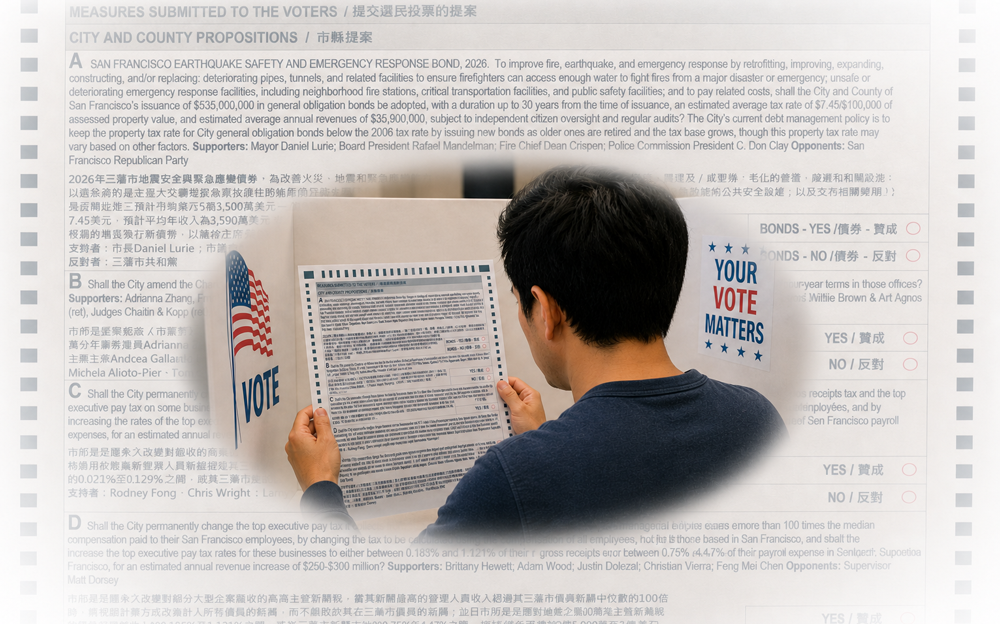
Ballot Simplification Committee: The Ballot Simplification Committee is charged with writing voter guide summaries of all local ballot measures at the 8th-grade reading level so voters can easily understand them.
Members of the Ballot Simplification Committee have highly specialized expertise that the Elections Commission lacks. For the Ballot Simplification Committee, Mayoral appointee nominations are required from external organizations: Of the five members, the mayor appoints two; one is nominated by the Northern California Newspaper Guild, and one by the Superintendent of the San Francisco Unified School District, who must be an educational reading specialist. For the Board of Supervisors three appointees: Two nominees must be from the National Academy of Television Arts and Sciences or the Northern California Chapter or the Northern California Broadcasters Association, and one must be nominated by the League of Women Voters of San Francisco.
The recommendation was to move the Ballot Simplification Committee from the Elections Code to the Administrative Code. That’s because of the Task Force’s initial directive that all public advisory bodies be located in the Administrative Code.
The City Administrator’s staff recommendation to the Streamlining Task Force specifically stated:
"The Task Force should not modify the appointment process or qualifications. While it is unusual to explicitly task outside organizations with nominating members, the approach appears to be effective in maintaining the Committee’s independence and nonpartisan character. Additionally, the current qualifications promote public confidence that members are selected for their professional expertise."
Just as the Streamlining Task Force had been in a tizzy that external organizations were authorized to nominate members to the SOTF, they voted to potentially change the nominations for the Ballot Simplification Committee members and also modify its member qualifications and nomination provisions — ignoring the Task Force’s own staff recommendation against doing so. As of November 19, the Staff had not yet provided recommendations about those changes, which remain unresolved.
Simplification was the only other body besides the SOTF that is proposed to have its external organization nomination requirement removed.
Ethics Commission: Still undecided is whether to remove the Ethics Commission’s ability to place measures on the ballot independently. The Task Force made no decisions about this body, and it’s not on the December 3 meeting agenda.
Commission Streamlining Task Force: In agenda item 5, "General City Administration," the Streamlining Task Force considered the Staff’s recommendation to keep the Streamlining Task Force in the City Charter, even though it has a voter-mandated sunset date in January 2027, and even though it is just an advisory committee that belongs in the Administrative Code. During their discussion, Chair Harrington let the cat out of the bag, stating (at 1:53:07 on audiotape) that:
"You [this Task Force] will be getting a report from SPUR in the next few weeks, and that report will talk about refreshing the whole Charter — not just the [Boards and] Commission portion of it [the Charter] — and they believe the City should have a process on a regular, on-going basis to refresh the whole Charter. And so we may want to include that in our final report."
Harrington knew that, of course, because he is a Board Member of SPUR, and probably knew SPUR would release the report five days later, on November 10.
The Task Force deferred making any decision on November 5 on whether to accept the Staff recommendation to keep the Streamlining Task Force in the City Charter, or move it instead to the Administrative Code, and whether to apply any of the Advisory Body template provisions to their own body, opting to wait to get a further report back from the City Administrator’s support staff.
There you have it: San Franciscans are being SPUR’ned, with help from the Streamlining Task Force. Harrington’s blabbing revealed on November 5 that the Streamlining Task Force intends to make recommendations to revise the City Charter beyond reforms of the Task Force’s purview to focus only on the City’s boards and commissions.
The list of egregious major decisions made by the Streamlining Task Force grew again during its November 19 meeting.
November 19 Meeting Failures
The Streamlining Task Force’s November 19 meeting was supposed to revisit 31 decisions it had deferred during its previous meetings and conduct so-called "consistency checks" on those decisions. Little was accomplished during that six-hour meeting, with only 6 of the 31 decisions revisited. And it added an additional 6 decisions to revisit on November 19, essentially creating a wash.
That delayed decision-making further and may now require the Task Force to schedule weekly meetings to complete its work on developing proposed ordinances and the promised Charter amendment language by the deadlines imposed by the passage of Proposition E.
The Task Force did make some major decisions on November 19:
Sheriff’s Department Oversight Board: The Sheriff’s Department Oversight Board (SDOB) was created by San Francisco voters in November 2020 through the approval of Proposition D, a City Charter amendment, which passed with nearly 67% of the vote. It was introduced and passed to provide independent oversight and accountability for the Sheriff’s Department, following a series of scandals involving allegations of inmate abuse. The SDOB’s main functions include appointing an Office of Inspector General (OIG) to investigate misconduct, review complaints, and recommend policy changes regarding the city and county jails.
But due to the City’s foot-dragging under then-Mayor Breed, the SDOB wasn’t fully seated until December 2021, and it inexplicably wasn’t convened until the first time in August 2022, nearly two years after voter passage. The Mayor and Board of Supervisors have slow-walked funding for the SDOB, and it still has not received full funding, now five years after passage. The initial budget did not fully anticipate the costs of personnel, office space, and supplies needed to get the OIG operational.
The SDOB, along with the Office of the Inspector General (OIG), is currently seeking full funding through the budget process to become fully operational. The Inspector General was appointed in late 2023 and officially began in January 2024, but the OIG is still being built. In the meantime, the Department of Police Accountability continues to handle investigations of serious misconduct through a Memorandum of Understanding (MOU) with the Department of Police Accountability.
The Budget and Legislative Analyst’s "Financial Analysis Report" of the costs of the City’s Boards and Commissions claims the SDOB costs $1.3 million annually, but its not known how much of the $817,727 in part-time "soft costs" for the SDOB’s commission support is padded by costs associated with the MOU with the Department of Police Accountability, which might vanish if the OIG were fully operational.
On November 19, the Streamlining Task Force voted to eviscerate the SDOB essentially, and voted to convert the SDOB to an advisory body, move it from the Charter to the Administrative Code, not to apply a sunset date as an exception to the Task Force’s Advisory Body template, change member removal from "for cause" to "at will," change the SDOB membership qualifications and change them from mandatory to "desirable," remove the SDOB’s budget and contract approval authority, and remove subpoena power from the SDOB or its Inspector General.
The SDOB was essentially gutted. And once it is formally in the Admin Code, there’s no stopping a future Board of Supervisors, a useful village idiot, or a future Streamlining Task Force from then applying a sunset date.
But again, the Streamlining Task Force still couldn’t make up its mind. It punted, deciding on November 19, whether the SDOB will be allowed to hire its own Inspector General, creating yet another deferred decision that had first been deferred on September 17. Apparently, despite thinking about its deferred decisions involving the SDOB for fully two months, the Task Force still couldn’t make up its collective mind.
This may be because City Hall really doesn’t like any meaningful oversight of elected officials or oversight of the "City Hall Family," voters’ wishes to the contrary.
Revising Previous Preliminary Decisions: Shockingly, during agenda item 6 on November 19, about revisiting their previous decisions, the Task Force was still quibbling over which decision-making bodies they would retain in the Charter vs. move to the Administrative Code. The meeting minutes actually report "Several members expressed difficulty identifying a consistent rationale" behind their previous decisions.
Community observers have also noted the glaring inconsistencies in the fluctuating rationales. Thus, they’re now doing "consistency" checks at the last minute.
The minutes also report Member Sophia Kittler had read SPUR’s November 10 "Charter for Change" report and she had concerns about SPUR’s recommendations.
Notably, Doug Engmann, a principal member of the Proposition E campaign, criticized the Task Force for larding up an excessive number of changes into a single agenda item. The Westside Observer previously noted that the agenda item covered 32 pages in a 49-page presentation that addressed dozens and dozens of critical issues, and that it was totally unfair to members of the public who may have wanted to comment on several of those distinct issues but were restricted to a single two-minute period to testify. That material could have been broken down into several separate agenda items.
The Task Force’s list of the 150 boards and commissions (formerly the "Commission Workbook") shows that at the outset of their work, there were 43 boards and commissions in the City Charter, but the current recommendation is to leave just 15 in the Charter, meaning they will have chopped 26 bodies out of City Charter protections. That’s because their initial recommendations had been to move 19 into the Admin Code, but they are still deciding what to do about another 11 bodies. That may happen on December 3. Remarkably, one of the bodies they are still debating is moving the Health Commission — which has oversight of both SFGH and Laguna Honda Hospital — to the Admin Code. They’re also considering moving the Airport Commission to the Admin Code, and potentially the Fire Commission, too.
Part of the problem is that once moved to the Admin Codes, all bodies face having a three-year sunset date forced on their existence, placing their long-term viability at the risk of whims of future members of the Board of Supervisors simply not extending their sunset dates — driven by the whims of the mayor or SPUR.
The Task Force made a slew of other decisions on November 19, not described here. They’re available in the meeting minutes, and in the Task Force’s 28-page "Decision Log."
Operational Improvements
Also on the November 19 meeting agenda was a discussion of so-called "operational improvements." Because the Task Force was reduced to a bare quorum with just three of its five members present, some decisions were again deferred until their next meeting, perhaps with the full Task Force. Again, only a few of those improvements are described here, since several of them are relatively minor and still subject to change.
The big "improvements" debated on November 19 include:
Creating a New Body: The Task Force considered a proposal to create a new body to take on the Streamlining Task Force’s work after it dissolves, since Proposition E imposed a mandatory date to sunset it in January 2027. That would follow the planned ballot measure to change the Charter that will be on the November 2026 ballot. The discussion in November centered on the Civil Grand Jury’s "Commission Impossible" report of July 2024, which recommended that a new body be charged with periodic and systematic evaluation of all retained boards and commissions. But the Streamlining Task Force was reluctant, and decided against including in their report’s recommendations another oversight body, even though SPUR itself thinks this should be done.
Ditching Commission Executive Secretaries: City Charter §4.102-9 states each appointive board or commission shall "Appoint an executive secretary to manage the affairs and operations of the board or commission." One Task Force member stated during the November 19 meeting (at 5:36:00 on audiotape):
"It also begs the question of the Charter provision that allows commissions to appoint their own commission secretary, and whether or not we want to allow flexibility for a greater pool of resources for more centralized City functions and centralized support for these bodies."
Minutes later, Deputy City Attorney Jon Givner sought clarification (at about 5:47 on the audiotape) from the three Task Force members present, asking for guidance on drafting language for a Charter amendment, specifically the question of Executive Secretaries for commissions. Member Kittler said, from the perspective of her day job [as the Mayor’s Budget Director], "I would strongly prefer that [Commission Secretaries] not be in there, so we can explore other staffing options."
Obviously, focusing primarily on her Mayor’s Budget Director day job — pinching pennies and hunting for any potential cost savings — Kittler — who is not qualified to hold the Streamlining Task Force’s seat as an "expert" in open and accountable government — wants to eliminate Commission Secretaries. That’s a position mandated in the City Charter for managing the affairs of their respective Commissions.
Commissions have a dedicated secretary, rather than relying on a centralized "floating" pool of secretaries because "institutional knowledge" about a given Board’s current affairs would otherwise vanish.
Annual Reports: The Task Force voted to eliminate the requirement that all bodies retained, whether in the Charter or in the Administrative Code, submit annual reports, as currently required by City Charter §4.103, apparently deciding to strip the current requirement from the City Charter. They did so, even though the Civil Grand Jury itself had recommended several criteria for inclusion in board and commission annual reports, which are supposed to be prepared separately and distinct from the annual reports each City Department submits.
The Task Force voted to eliminate the annual reports, with Task Force member Natahsa Mihal (the City Controller’s appointee to the Task Force), asserting annual reports "may be too frequent," and that if members of the public want to track down the performance of a given board or commission, they can comb through a board or commission’s web site, and pore through the meeting minutes of the body’s meetings.
That may be impractical, because the Health Commission, for instance, holds two meetings of the full Commission each month, and once-per-month meetings of three or four separate Health Commission subcommittees, That suggests that to gauge the performance of the Health Commission’s accomplishments in a given year, members of the public would have to hunt down approximately 80 meeting minutes to read through.
More brazenly, Mihal suggested the "intended audience for [annual reports] is unclear." It was brazen, precisely because Charter §4.103 clearly states that each board or commission "shall file such report with the Mayor and the Clerk of the Board of Supervisors." If Mihal’s motion — that was approved — will deprive the Mayor and Board of Supervisors of this clear performance-based assessment tool.
And it would be a labor of love not just for members of the public. A future Grand Jury, the incumbent mayor, and the 11 members of the Board of Supervisors who might be interested in assessing the effectiveness and accomplishments of the surviving 80-plus boards and commissions. That would seem the opposite of the "efficiency" the Streamlining Task Force claimed it was looking for in a more responsive City government.
The Task Force also chose not to include a recommendation in its final report describing how secretaries should prepare the meeting minutes of each board and commission. That failure would clearly make the hunt through meeting minutes to assess the performance of a specific board and commission more difficult.
San Francisco requires annual performance appraisals for each City employee. Eliminating Charter provisions requiring annual reports runs contrary to that principle.
The Charter’s annual reports for boards and commissions is separate from the City’s Administrative Code §2A.30 that requires each City Department head to submit an annual report about the activities and accomplishments of their department. Why would you assess the department’s performance, and individual employee’s performance, but not the board or commission’s performance?
And although the November 19 meeting minutes clearly states on page 13 that the Task Force had removed the annual report requirements (only for decision-making bodies), the sample draft Charter change language City Attorney Jon Giver is presenting to the Streamlining Task Force on December 3 shows that the annual report requirement will be removed from all boards and commissions, not just decision-making bodies.
Major Decisions Made and Coming
Remarkably, the November 19 meeting minutes report that Task Force member Sophia Kittler: "… mused that the Task Force’s templates have been useful as a decision-making framework, but may not be helpful as a messaging tool going forward." It’s essentially an admission that all of the decisions this Task Force has made based on its templates may have been flawed at the very outset, at least from a "messaging" standpoint. If it’s not good messaging, why should San Franciscans be assured they have been valid decisions?
If it isn’t good messaging, why would voters pass a charter change ballot measure based on them in November 2026?
Since the Westside Observer’s last article, our list of the Task Force’s major decisions to date linked above reveals that of the bodies evaluated by the Task Force:
- 15 will be kept in the City Charter.
- 30 will be moved from the City Charter to the Administrative Code. That will allow the Board of Supervisors to make changes to the Admin Code without needing voter approval. Additional bodies may be moved too, driving it to potentially 45 bodies moved to the Code.
- 14 will be kept as governance bodies.
- 23 will lose their authority to hire and fire department heads, and were initially reduced to having "consultative roles only" in hiring decisions. But the Task Force sprung on members of the public on November 19 that the "consultative" roles have been changed to being an "optional" requirement, suggesting the mayor will be able to escape consulting about hiring decisions with the Commissioners that are supposed to provide oversight of a given department and department heads, before the hiring offer is made.
- 10 may retain authority to hire and fire department heads. That’s apparently still subject to change.
- 12 bodies will have three-year "sunset" dates applied to them, indicating that the Board of Supervisors will not be required to extend their continuing reauthorizations when the scheduled sunset date is reached. The initial sunset dates were to occur in 2029, but between November 19 and December 3 their sunset dates were magically changed to sunset in 2028, chopping off a full year, without explanation for the sudden change.
- 20 bodies are recommended to change the removal of member appointees from for-cause onlyto at-will removal. This will hand the mayor, and/or the respective member’s "appointing authorities" subject to the mayor’s political pressure, carte blanche authority to get rid of any board or commission member for any reason, no reason whatsoever, or for having cast a specific policy body vote that the mayor or appointing authority doesn’t like.
- 19 bodies will have qualifications for member appointments changed, ranging from eliminating any specific qualifications whatsoever, to changing from "seat-specific" to "body-level" qualifications, and all of them "desirable" rather than mandatory qualifications for appointment. This, too, hands more power to a "strong Mayor" form of government. The Task Force plans to revisit member qualifications changes on December 3 for 51 more bodies.
This illustrates how San Francisco voters have been SPUR’ned under Proposition E, with the complicity of the Streamlining Task Force. And more changes are yet to come during the Task Force’s meetings in December and January. Stay tuned.
December 3 Meeting
Here we go again with another clown-car meeting that is so jam packed it will easily be another six-hour-plus meeting. The SPUR-driven Task Force has become a clown-car, like Lurie’s initial appointment of Beya Alcaraz as D-4 Supervisor. It should humiliate him.
The meeting agenda lists seven bodies to wade through on previously deferred decisions. But the Staff’s "Deferred Decisions" list in its running "Decision Log" still lists at least 30 yet unresolved specific decisions, and that’s not including potentially revisiting member qualifications changes on December 3 for 35 to 51 more bodies it had not previously discussed seat qualifications for members of the various bodies.
Item #8 (page 34) in its "Deferred Decisions and Consistency Checks – Part 2," a 43-pagePowerPoint presentation suggests four options on whether to further update and change seat qualifications for body members. The options are 1) That all bodies require either no seat qualification, or seat qualifications that are merely "desirable" at the body level; 2) Group bodies by type of body or type of department and apply qualifications by group type; 3) Revisit the list of bodies one-by-one to decide body-specific qualifications; and 4) Just uphold all decisions previously made while considering other changes to the bodies in context.
It would be irresponsible to adopt either the first or second option, since there would be no discussion of the functions of each individual body, and no context of other changes that were initially made to the bodies on what to re-decide. As well, Option 1 might radically change previous targeted exceptions made for a given body. Three other bodies need additional clean-up on who appoints the body’s members, and two other bodies need to be "standardized" because of previous inconsistent decisions.
The "sneak peek" of proposed Charter Amendment language being developed by the City Attorney is also on the agenda. The "sneak peek" samples include amending: Charter §3.100 that the mayor appoints and removes all department heads unless specified elsewhere in the Charter; §4.101 applying the Task Force’s template rule that members of all commissions and advisory bodies serve "at the pleasure of" their appointing authorities, a euphemism for the harsher "at-will" removal; §4.101.5 applying the 60-day holdover limit to all boards and commissions, whether in the Charter or in the Administrative Code; §4.101.6 establishing term lengths and term limits for all Commissioners; §4.102 eliminating commission nominations of department heads, eliminating commission removal of department heads, removing the annual statements of purpose, and removing the requirement to hire a commission secretary; §4.103 removing the annual report requirement; and other clean-up Charter amendments.
Other items may also be brought up for decisions on December 3.
SPUR’s "Charter for Change"
SPUR — the San Francisco Bay Area Planning and Urban Research Association — is a nonprofit organization started in San Francisco focused on urban policy, but has spread its tentacles to regional offices in San José and Oakland.
As mentioned above, SPUR’s November 10 "Charter for Change" report will worsen what the Streamlining Task Force has been preparing for the November 2026 Charter change ballot measure — going way beyond just commission reforms.
The report contains 10 recommendations, involving potential massive restructuring of City departments and moving many of them to the Administrative code; granting expanded powers to the City Administrator (who is an appointed, not elected, department head) to serve as the City’s "Chief Operating Officer," set City policy, and expanding the five-year term to a ten-year term; giving the green light to hire four or five "deputy mayors"; eliminating the prohibition mayoral staff can’t earn more than 70% of the mayor’s salary; updating the bargaining process for unions representing all City employees; revise how ballot measures can be placed before the voters; create more "flexible" government via reorganizing City departments into so-called "agencies" having more than one City department; shift City operational rules from the Charter to the Administrative Code; and create greater flexibility in the City budget by reducing, freezing, or eliminating so-called "budget set-asides" and "baseline funding" requirements, many of which have been voter mandated at the ballot box.
SPUR’s report claims it wants these 10 changes incorporated into the Charter change recommendations the Streamlining Task Force will place on the November 2026 ballot, which election is now just 11 months away and will need to be prepared and finalized just eight months from now, by August 2026.
SPUR’s report — that Task Force Chair Harrington and Member Kittler have heaped praise on — has wildly moved the goalposts of the Streamlining Task Force’s mandate of focusing solely on Commission reform, to suddenly include broader changes to the Charter without voters’ pre-approval.
The majority of changes the Streamlining Task Force has made to date were all extremely popular with San Francisco voters, or voters would not have enacted so many Charter changes at the ballot box throughout the years. The Task Force has taken a wrecking ball to voter’s past decisions regarding open and accountable government, eliminating many popular decisions that are disregarded by established elite groups, such as SPUR.
Unfortunately, that’s not the end of the changes SPUR wants done. SPUR has its eyes set next on addressing San Francisco’s electoral systems, campaign finance, human resources, and voting procedures, which are also set in the Charter. SPUR claims additional areas would benefit from a separate, dedicated reform process, including additional Charter changes and simplifying the planning code, updating civil service and human resources procedures, and "streamlining" environmental, tax, and administrative codes.
What SPUR is recommending sounds less like exciting opportunities and more like an ongoing nightmare for San Franciscans. The Westside Observer will have more to say about SPUR’s plans in our next issue.
Make San Francisco Great Again?
Mayor Lurie’s own "Project 2025," is well underway, but may still be defeated.
Mission Local also reported on November 10 that Board of Supervisors President Rafael Mandelman and Mayor Lurie are teaming up by putting together another task force (apparently separate from the Commission Streamlining Task Force) for City Charter reform in November 2026. Reportedly. Mandelman says the new Task Force will be comprised of a "broad selection of San Francisco leaders" from businesses, labor, and nonprofits, along with an array of City staff, elected officials, and Lurie’s current Chief of Infrastructure, Climate and Mobility who was the former head of SPUR, Alicia John-Baptiste; City Administrator Carmen Chu; and staff from the City Controller’s Office and City Attorney’s Office.
Noticeably absent will be any representatives in the new Task Force from neighborhoods, and run-of-the-mill everyday San Franciscans. The new Task Force is reportedly to conclude its work by February or March 2026, but it’s not yet known who the actual members are, whether they have begun meeting, and whether they are meeting in public for citizens to attend and observe their deliberations. It’s also not known if Board President Mandelman will schedule City Hall public hearings before the Board of Supervisors about what his Task Force is up to.
Why is there a sudden need for a second Task Force essentially performing parallel functions, but excluding members of the public? Shouldn’t a new Task Force be subject to the Brown Act? Why hide behind the secrecy of a "passive meeting body"? Why have Lurie and Mandelman done so?
The majority of changes the Streamlining Task Force has made to date were all extremely unpopular with San Francisco voters, or voters would not have enacted to many Charter changes at the ballot box throughout the years. It’s why voters rejected Prop. D in November 2024.
If San Francisco’s City Hall wants to understand why voters are so unhappy, there’s no great mystery to unravel: Much of our unhappiness involves the many ways our City’s democratic processes are under attack by elected City officials, astroturf groups like Blueprint for a Better San Francisco and TogetherSF Action, and outfits like SPUR.
After all, there have been 398 public speakers during the Streamlining Task Force’s meetings through November 19, plus 529 letters submitted by members of the public to the Task Force so far, nearly all of which have opposed the Streamlining Task Force’s decisions every step of the way. Hopefully, that momentum will be sustained.
Monette-Shaw is a columnist for San Francisco’s Westside Observer newspaper, and a member of the California First Amendment Coalition (FAC) and the ACLU. He operates stopLHHdownsize.com. Contact him at monette-shaw@westsideobserver.com.
December 2025