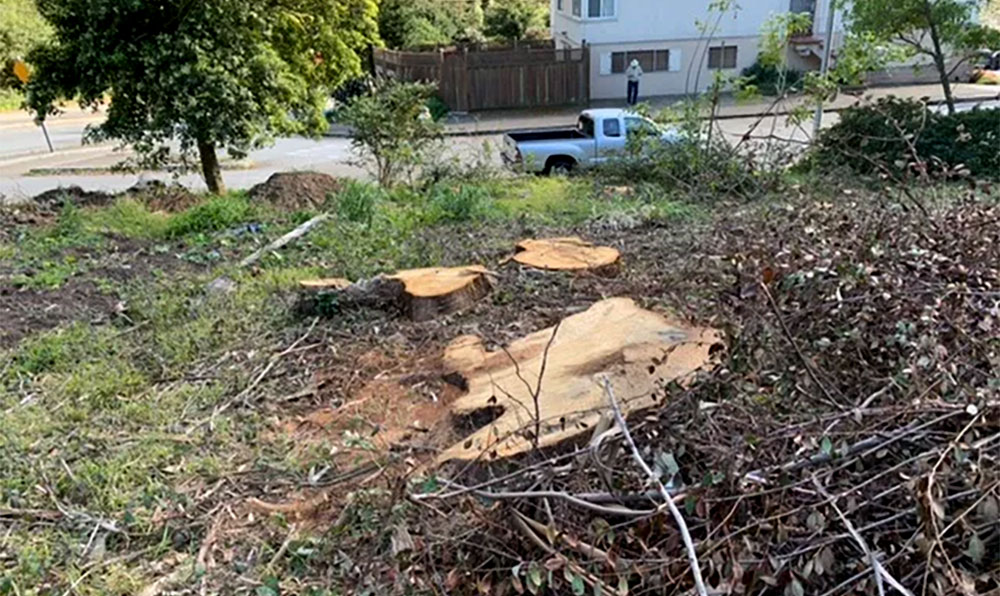

ACity Hall proposal that critics call “a developer giveaway” is triggering mounting opposition across San Francisco, even as the measure’s next committee hearing appears to have been delayed.
But the temporary delay should not be mistaken for retreat. Tree advocates visited every supervisor’s office at City Hall, speaking directly with aides about their concerns. Their message: public pressure is being felt, and it is working.
Don’t let up — growing public opposition is already forcing City Hall to take notice.
Why File 251211 Is Provoking So Much Backlash
At the heart of the fight is a proposed statutory amendment that opponents say would make three major changes to San Francisco’s tree-protection system: it would let developers pay an in-lieu fee instead of planting required trees, eliminate appeals for many trees labeled “hazard” removals, and strip the public of appeal rights for city-initiated tree removals.
In a handout delivered to supervisors’ offices, opponents framed the proposal in blunt terms: “A Developer Giveaway That Reduces Oversight & Silences the Public.” The document argues that current law treats required tree planting as a basic infrastructure obligation, while the amendment would let developers choose between actual planting and an allegedly inadequate fee.

The in-lieu fee has not been properly updated, even as labor, fuel, and concrete-removal costs have risen. The Department of Public Works lacks the staff, systems, and infrastructure to guarantee that each fee collected actually results in a tree being planted somewhere else.”
The Tree-Planting Fight: Pay a Fee, Skip the Tree?
Opponents say one of the most troubling sections of File 251211 would allow developers to avoid planting trees by paying a fee that does not reflect the real cost of putting a tree in the ground.
The in-lieu fee has not been properly updated, even as labor, fuel, and concrete-removal costs have risen. The Department of Public Works lacks the staff, systems, and infrastructure to guarantee that each fee collected actually results in a tree being planted somewhere else.
A 2023 UCSF payment of $242,000 into the Adopt-a-Tree Fund, which was supposed to generate more than 100 new trees within three years has resulted in zero trees planted to date. A Budget and Legislative Analyst audit found San Francisco’s street-tree data system produced unreliable reporting.
Allowing developers to pay instead of plant could permanently erase viable future tree locations, critics further warn, because the proposal contains no requirement to preserve plantable space if a developer opts for the fee.
The Appeals Battle: Who Gets to Challenge a Tree Removal?
Another major flashpoint is the proposal to eliminate public appeals for trees designated as hazards. Under current law, the public can appeal a tree-removal permit. Under the proposed amendment, opponents say residents could lose not only the right to appeal, but even the right to object before removal in some cases.
Arguably, this change invites abuse. As a case study, opponents point to a recent Hayes Valley episode in which a full block of trees was reportedly marked for immediate removal as hazardous. According to the filing, public outcry triggered a re-evaluation and most of those trees remained standing.
Opponents also dispute whether there is any real crisis requiring such a drastic rollback of public rights. Their handout says Public Works has claimed that hazard trees have failed during the appeal period, but could not cite a single example. It further states that only seven hazard-tree appeals have been filed in the last six years.
City Projects Could Also Be Shielded from Appeal
But File 251211 goes even further by barring the public from appealing city-initiated tree removals. That matters because some of San Francisco’s biggest tree fights have involved government projects, not private applicants.
The handout lists several cases in which appeals or the threat of appeals changed the outcome: 45 trees saved on 24th Street, compensation required for UCSF removals, half of Van Ness’s threatened trees preserved, and a large-scale Market Street tree-removal plan reportedly abandoned under public pressure.
Opponents say those examples prove that appeals are not bureaucratic clutter. They are one of the few mechanisms ordinary residents have to challenge powerful institutions when environmental and neighborhood decisions are made behind closed doors.
Pressure Campaign Moves Inside City Hall
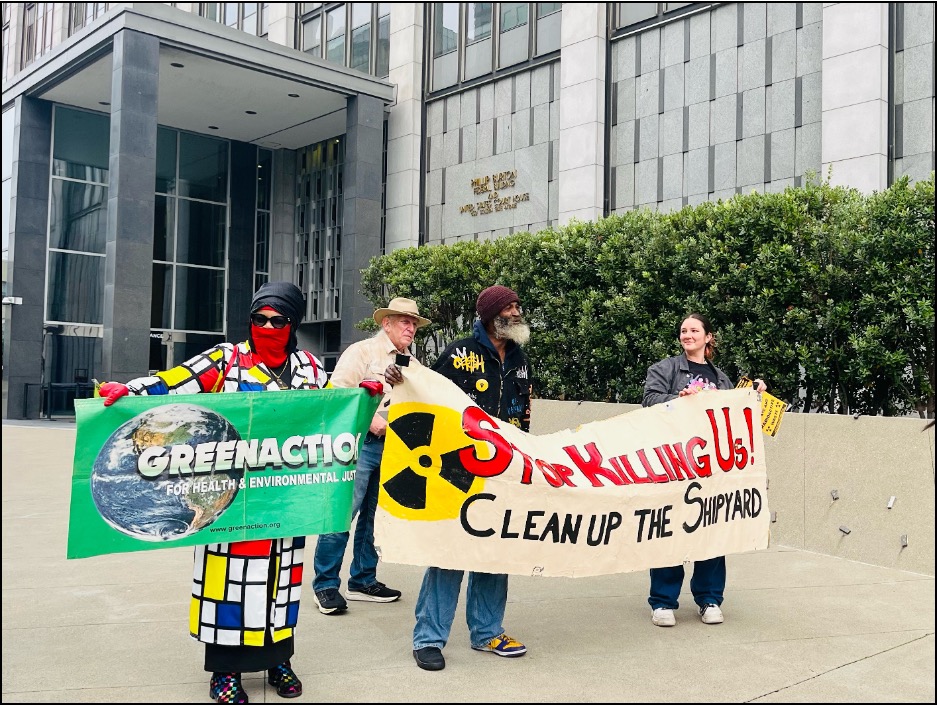
Opponents are not relying solely on public comment periods. Activists went office to office in City Hall, raising concerns directly with supervisors’ aides. Just about every Aide mentioned that they’ve been hearing from you, and that this makes a difference.
The battle over File 251211 is no longer confined to urban-forestry circles. It’s a test of whether City Hall will side with neighborhoods or with developers and agencies seeking fewer obstacles.
The Crocker Amazon Warning
A larger fear among tree advocates: once appeal rights are weakened, large-scale removals will become easier to push through with less scrutiny—such as the fight over a reported city plan to remove 120 large trees in Crocker Amazon to make way for fenced synthetic-turf baseball fields, and linked to a campaign site opposing that effort.
File 251211 is not just about procedure. It is about who gets heard before irreversible changes are made to the city’s tree canopy, streetscape, and public realm.
A Political Test for the Supervisors
The public mood has shifted against systems that appear to favor insiders over communities — residents are increasingly angry at decisions made without meaningful neighborhood input and are looking to local officials to “hold the line on community rights.”
Whether the Board of Supervisors agrees remains to be seen. But the battle lines are now clear: supporters may frame File 251211 as streamlining, while critics see it as something far more dangerous — a rollback of public oversight disguised as administrative reform.
If the measure returns to the Land Use and Transportation Committee calendar, the hearing is likely to draw far more than routine testimony. Opponents are treating it as a fight over democratic participation itself — and they are signaling they intend to bring that fight straight to City Hall’s front door.