San Francisco Rec Park has a racism problem.
Environmentalists Oppose Artificial Turf Expansion,
Toxics, Inequitable Planning, Safety Risks

• • • • • • • • March 2026 • • • • • • • •
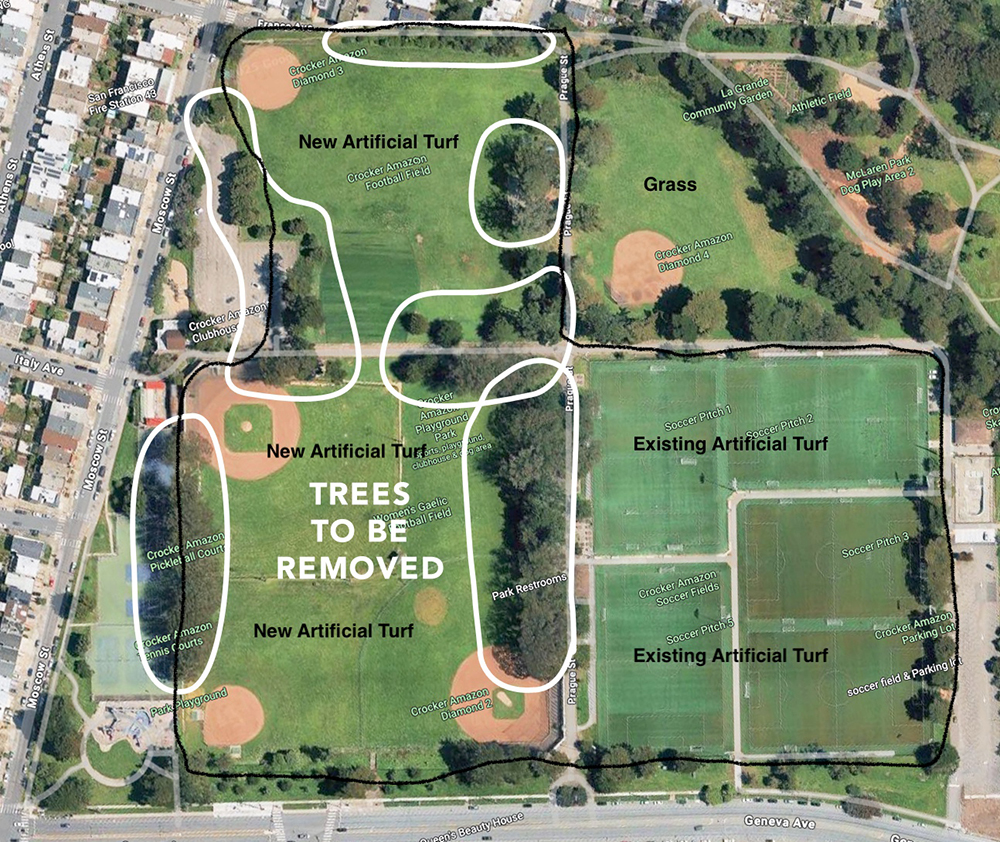
Community advocates are urging the San Francisco Recreation and Park Department (RPD) to immediately suspend its artificial turf program, citing concerns over racial inequity, player safety, environmental damage, and fiscal priorities. The coalition is calling on the Recreation and Park Commission to reject the Turf Program Policy and halt planned installations at the remaining natural grass fields at Crocker Amazon Park.
At the center of the dispute is Crocker Amazon Park, where advocates argue public resources are being directed toward costly synthetic turf installations rather than long-term investment in city gardeners and natural grass maintenance.
The “No Money for Grass” Excuse Doesn’t Hold Up
RPD uses the excuse that grass fields are costly to maintain, and there is no money for the gardeners who would be needed. This is false. RPD just doesn’t want to allocate funds to gardeners rather than private contractors.
Including salary, payroll tax, benefits, and pension contribution, the cost for a city gardener is approximately $250,000 per year.
The Funds Exist — The Priorities Don’t
The Commission approved $6.7 million in December 2022 to replace the artificial turf at the Crocker Amazon soccer fields. (The final cost may have been higher.)
If RPD prioritized staff, they could have put those funds toward two full-time gardeners focused only on those fields for 14.5 years. Why doesn’t RPD hire gardeners? The money is there.
Equity Zones on Paper, Inequity on the Ground
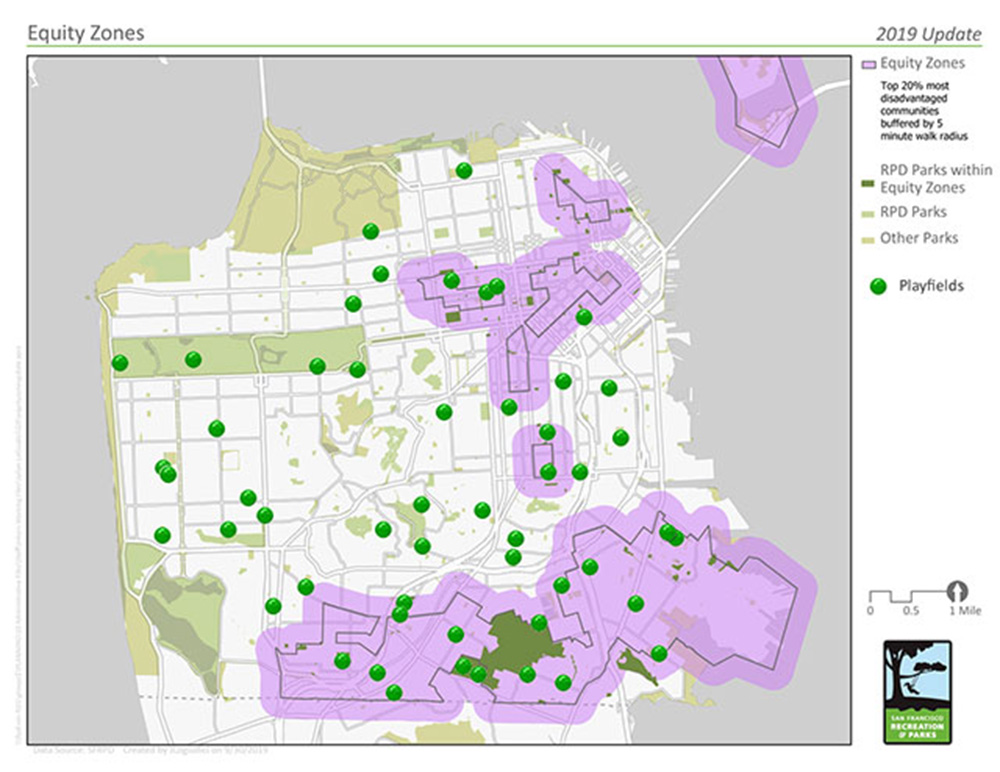
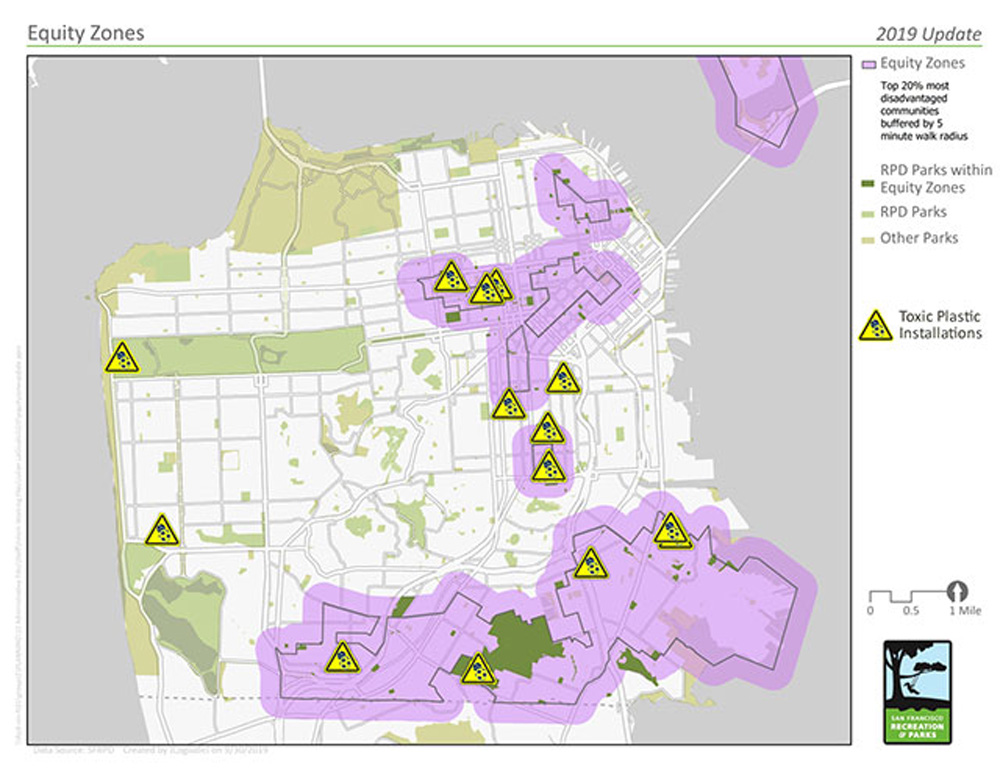
The Rec Park Department acknowledges that San Francisco has inequality. They mapped “equity zones” in 2019, showing the 20% most disadvantaged communities, buffered by a 5-minute walk radius.
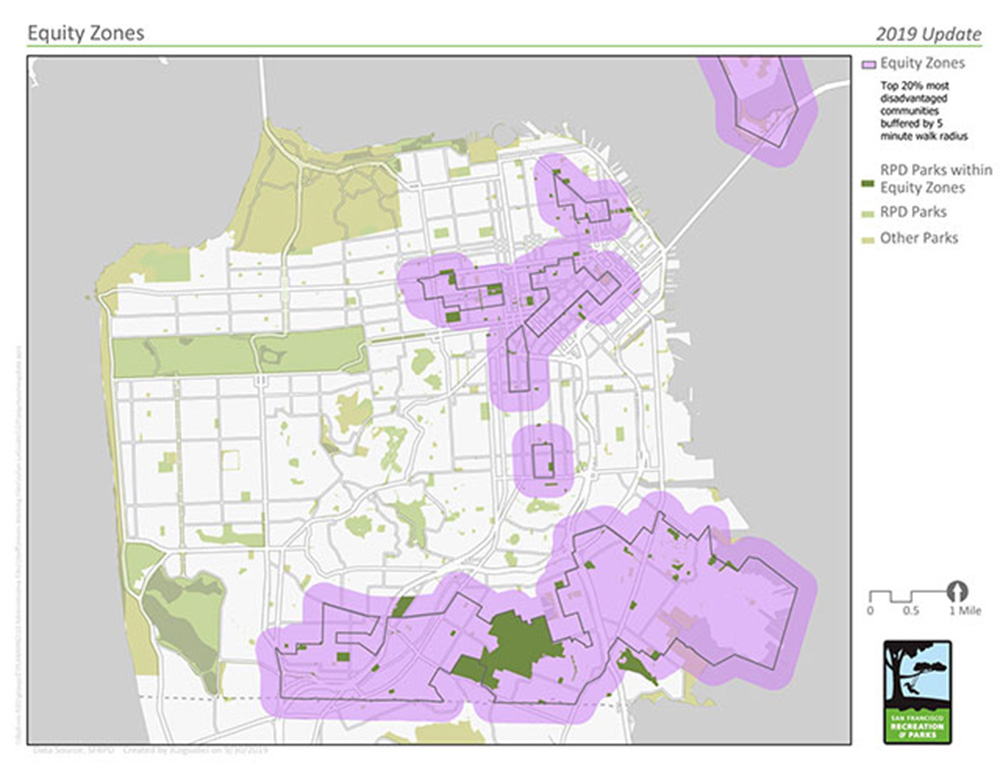
In the online athletic field reservation system, you can see that fields are distributed across the city.
The known-to-be-toxic synthetic turf fields are clustered in the disadvantaged communities.
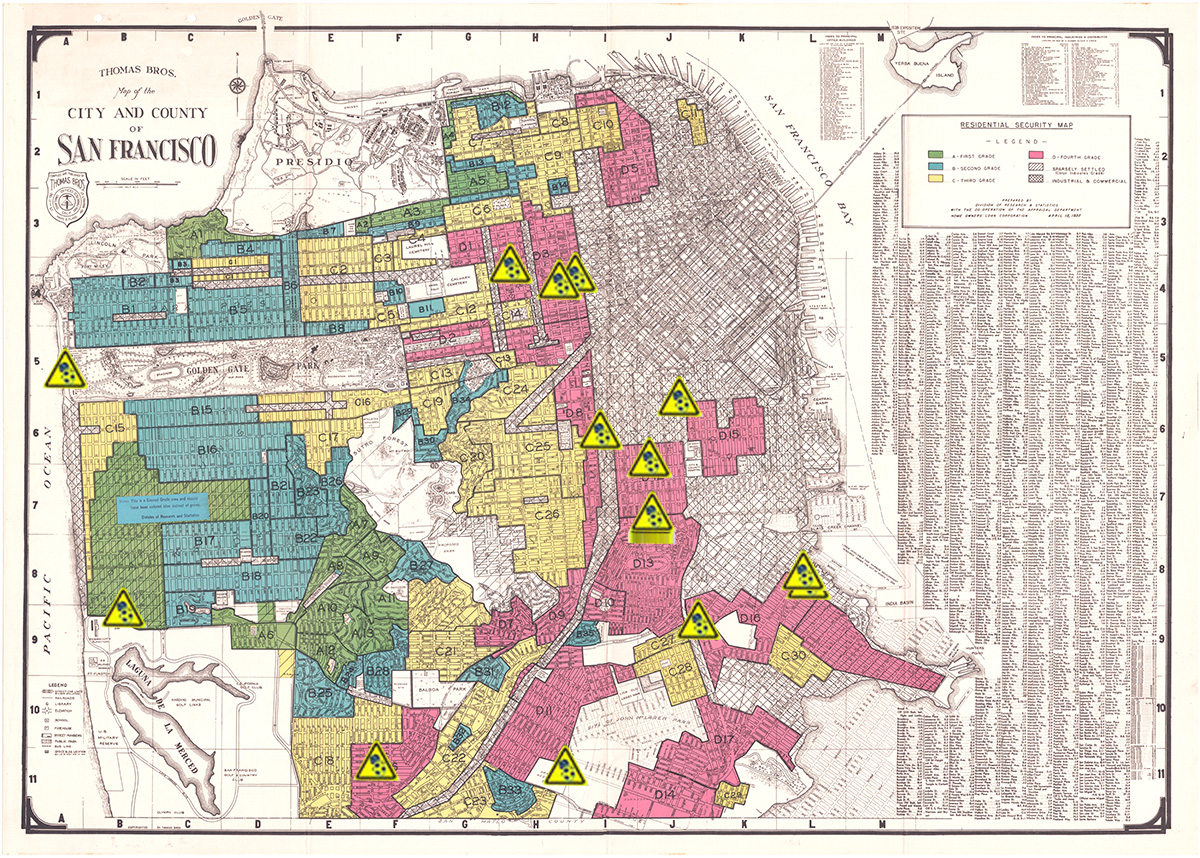
These fields also coincide with the red-lined communities.
Toxic Turf Concentrated in Disadvantaged Communities
The Recreations and Parks Department (RPD) does spend money on gardeners, and they do have gardeners maintaining grass athletic fields. They just don’t want to put those resources in disadvantaged communities. When they can get away with funneling money to contractors for capital projects, the disadvantaged are the communities that lose resources.
Artificial turf is inferior to grass. Injuries that break the skin become more enflamed on synthetic fields (“turf burn”), and tendon injuries are more frequent on synthetic fields (“turf toe”).
Synthetic turf fields in San Francisco repeatedly fail the standard impact attenuation test (Franklin Square, Garfield Square, Mission Rec Center, Silver Terrace, Youngblood Coleman). These are also known as the GMAX rating for fall prevention and the HIC (Head Injury Criterion). Park & Rec Project Manager Dan Mauer of the Capital & Planning Division spoke about this two months ago when he described the shock pads under the turf (which cannot be recycled despite the manufacturer’s claim that they are “cradle to cradle”).
Amenities Drive Demand — Not Synthetic Surfaces
Synthetic turf fields have lights, bathrooms, and, often, parking. Fields are requested based on those amenities, not because the playing surface is artificial turf. The higher number of “hours of play” is from stadium lighting.
The “field closure due to rain” data presented by staff is skewed toward January—before baseball practice starts—and ends in May—before the season ends. The playoffs extend into June. The accurate field closure percentage at Crocker Amazon in 2024 is 13%, far off from the figure presented at public meetings (47%).
Turf’s Hidden Environmental Costs
Artificial turf has many more problems, but today I’m not writing about its toxic load.
I’m not writing about the runoff from turf fields that should be nourishing the soil rather than the sewer, or that it takes 4 years’ worth of watering a field to manufacture the turf. I’d rather use the water on the grass than see it leach toxins into groundwater.
I’m not writing about the disruption to urban wildlife.
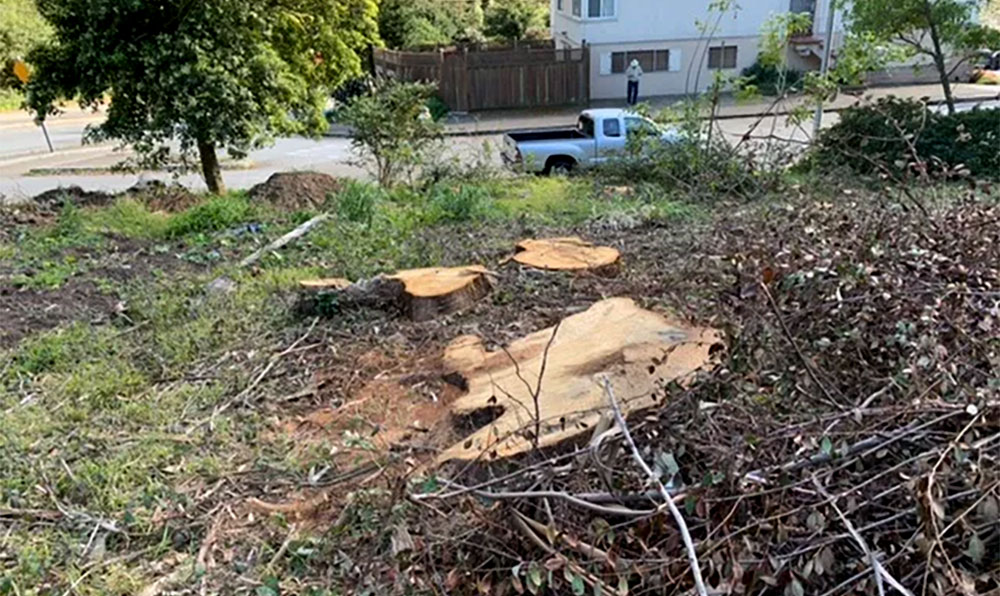
I’m not writing to say that the plan calls for removing 120+ trees — including several “significant trees” — and that it will not accommodate a 2-for-1 replacement (as communicated by staff).
I’m not writing about violations of the SF Climate Action Plan regarding petroleum mining, oil distillation, and plastic manufacture; greenhouse gas emissions and urban heating; and the 100% waste rather than Zero Waste.
Violating the City’s Own Planning Principles
I haven’t mentioned that the destruction of Crocker Amazon Park violates the principles, objectives and policies of the Recreation and Open Space Element of the SF General Plan.
I think the Recreation and Parks Commission should adopt the spirit of the Racial & Social Equity Initiative of the Historic Preservation Commission:
“Acknowledging and apologizing for the history of inequitable planning and historic preservation policies that have resulted in racial disparities; recommending that the department implement its racial and social equity action plan; recommending that the department develop proactive strategies to address structural and institutional racism.”
This Is a Racial & Social Equity Issue
RPD’s planning has been inequitable and has resulted in racial disparities.
It’s time to stop installing artificial turf in San Francisco—in all of our communities.
Editors Note: At the Recreation and Park Commission meeting Item #9 on February 19th, undeterred overwhelming public opposition, the “Synthetic Turf Program” was unanimously adopted.
Susan Mullaney, Rec & Parks advocate in San Francisco.
March 2026