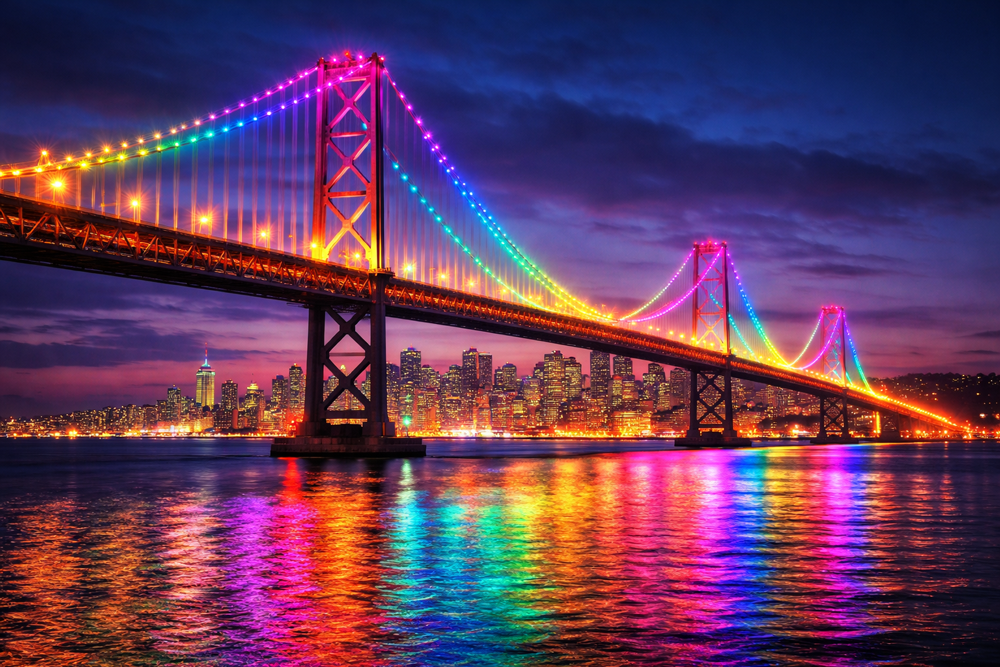
48,000 LEDs. Zero Accountability.
Allegations of Perjury, Fraud, and Environmental Evasion Raise Serious Questions About Oversight of the Bay Bridge Project

• • • • • • • • • • March 2026 • • • • • • • • • •
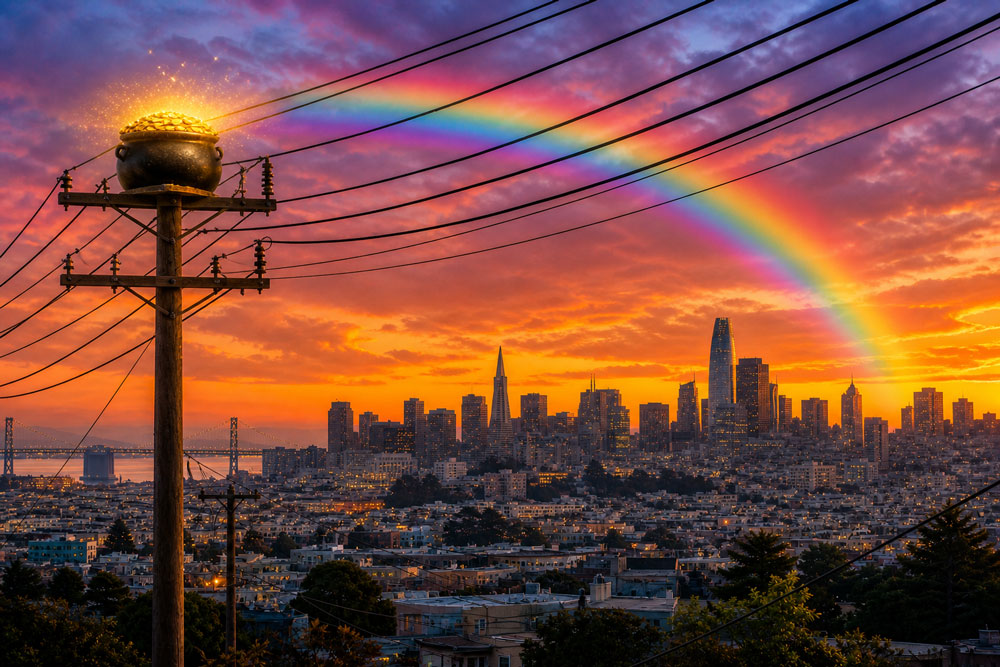
Ben Davis and his foundation, Illuminate, have taken a piece of the night sky from the people of the Bay Area. In place of natural darkness, they have installed the harsh glare of 48,000 blue-richlight-emitting diodes (LEDs). This is not merely a story about light pollution. It is a story about alleged regulatory manipulation, suppression of scientific evidence, and a coordinated effort to bypass legal safeguards designed to protect the public.
For years, much of the media has treated Bay Lights 360 as a civic celebration. It is time for serious scrutiny.
The Whistleblower Complaint and the Timeline
On February 19, 2026, Mr. Davis and Illuminate announced a Grand Lighting Ceremony scheduled for March 20, 2026. On February 21, 2026, Mark Baker, President of the Soft Lights Foundation, filed a whistleblower complaint with the California State Auditor. The complaint alleges widespread administrative misconduct involving officials at the California Department of Transportation (Caltrans), the Bay Area Toll Authority (BATA), and the San Francisco Bay Conservation and Development Commission (BCDC). It further alleges that Mr. Davis committed perjury.
Allegation of Perjury
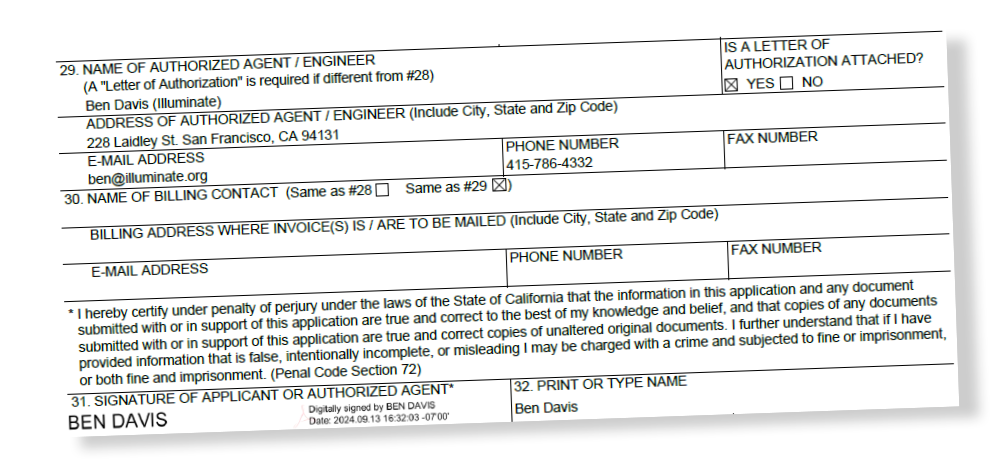
On September 13, 2024, Mr. Davis signed a Caltrans encroachment permit under penalty of perjury, asserting that he was an “Authorized Agent” for BATA. However, in response to a public records request, BATA confirmed that Mr. Davis has never been designated as an Authorized Agent.
An Unsigned, Undated Permit Application
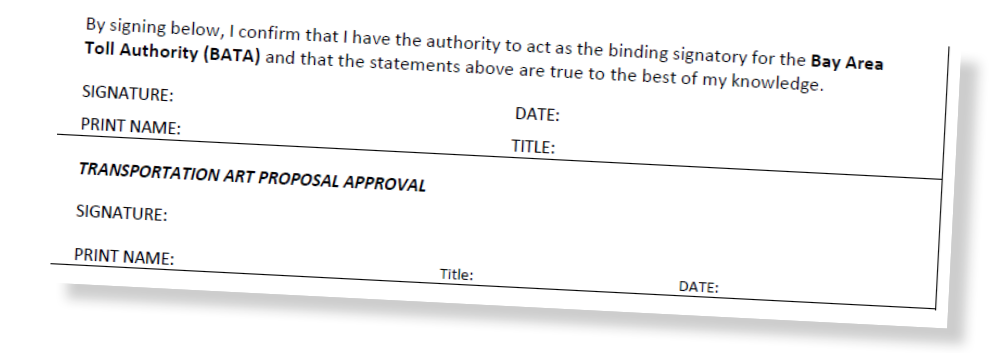
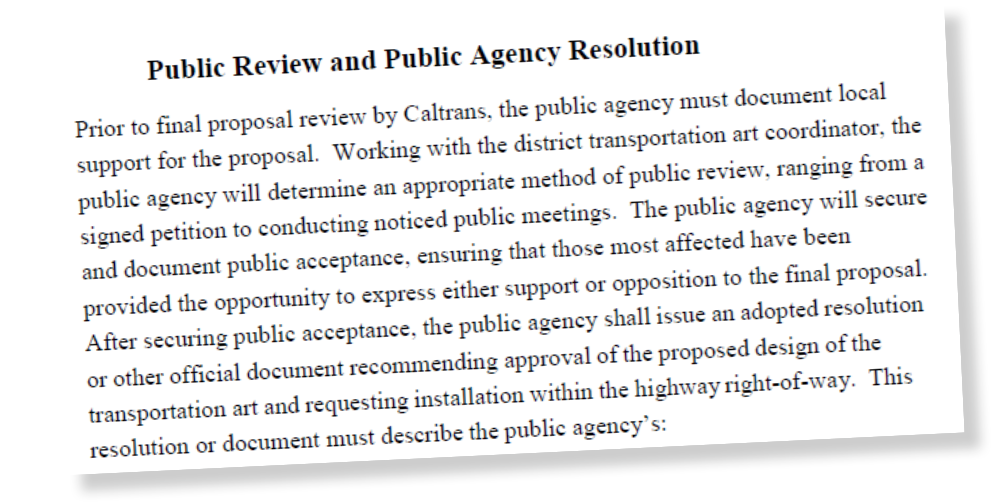
The Caltrans Transportation Art Permit application for the project is neither signed nor dated. The absence of formal authorization raises a basic question: Who officially requested or approved this project?
No Local Public Agency Sponsorship
Transportation Art projects must be sponsored by a city, county, town, or tribal government. Neither BATA nor Mr. Davis qualifies as a local public agency sponsor. According to the complaint, no qualifying public agency formally sponsored the project.

$11 Million—Privately Funded “Public Art”
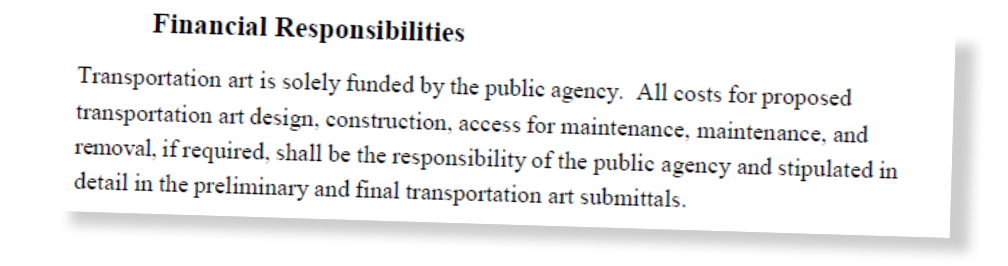
Bay Lights 360 is reportedly an $11 million privately funded installation. Yet Transportation Art guidelines require such projects to be funded solely by the sponsoring public agency. Critics argue that private funding was used to secure prominent space on the Bay Bridge without meeting statutory requirements.
No Documented Public Support
The complaint further alleges there is no documentation of formal public support. The City of San Francisco did not adopt a resolution recommending approval of Bay Lights 360.
CEQA: Where Is the Environmental Impact Report?
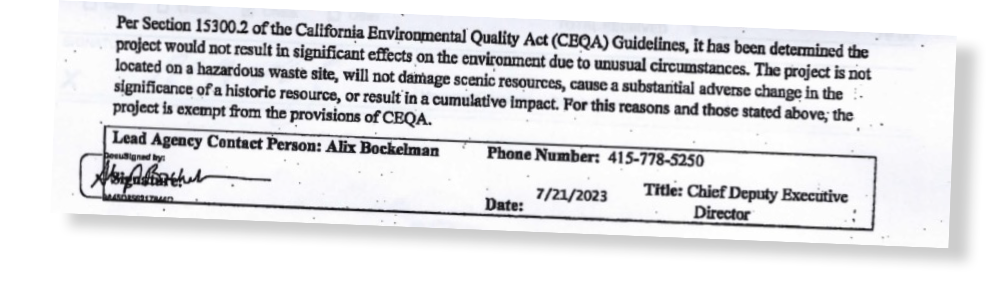
The project spans approximately 1.8 miles and involves tens of thousands of high-intensity LEDs. Under the California Environmental Quality Act (CEQA), such a project would typically require an Environmental Impact Report (EIR). Instead, BATA Deputy Executive Director Alix Bockelman filed a Notice of Exemption (NOE), asserting the project was exempt from CEQA review. The whistleblower complaint characterizes this exemption as improper.
“Minor Repair” Classification Under Fire
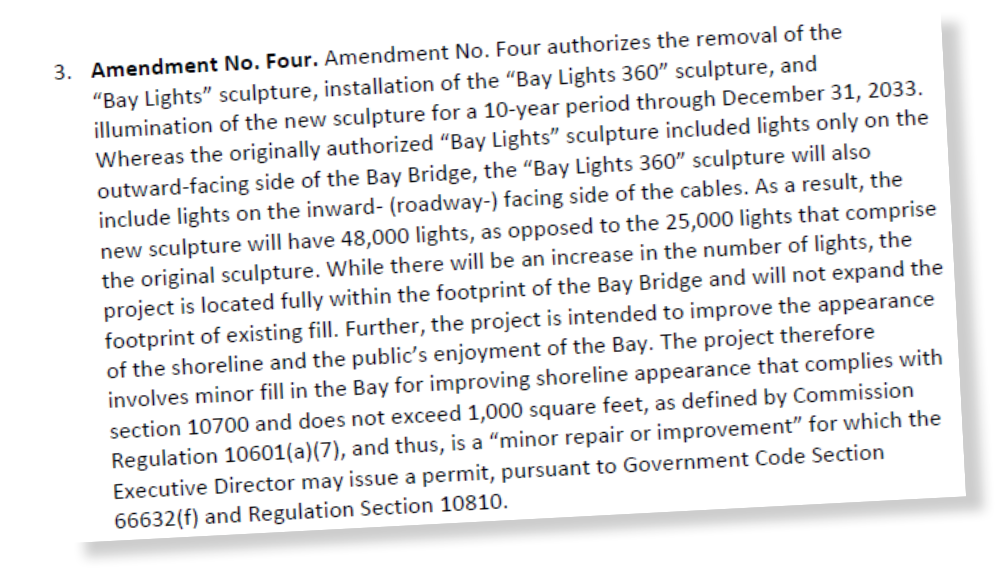
BCDC Executive Director Larry Goldzband reportedly classified the installation as a “minor fill” project not exceeding 1,000 square feet and as a “minor repair or improvement.” Critics argue that describing a large-scale, multi-million-dollar light installation spanning 1.8 miles as “minor” stretches regulatory definitions beyond recognition.
Background and documentation: Mr. Baker has documented aspects of the project and his concerns.
Bottom Line: Accountability—or a Permanent Precedent
Let’s hope that the California State Auditor conducts a thorough investigation and that the lights go out on Bay Lights 360. Perhaps we will then have that part of the darkness of the night sky restored to us. We have more than enough lights already.
The Bay Area has no shortage of artificial light. The question now is whether it also faces a shortage of accountability.
David Romano is an environmental activist living near Ocean Beach
March 2026