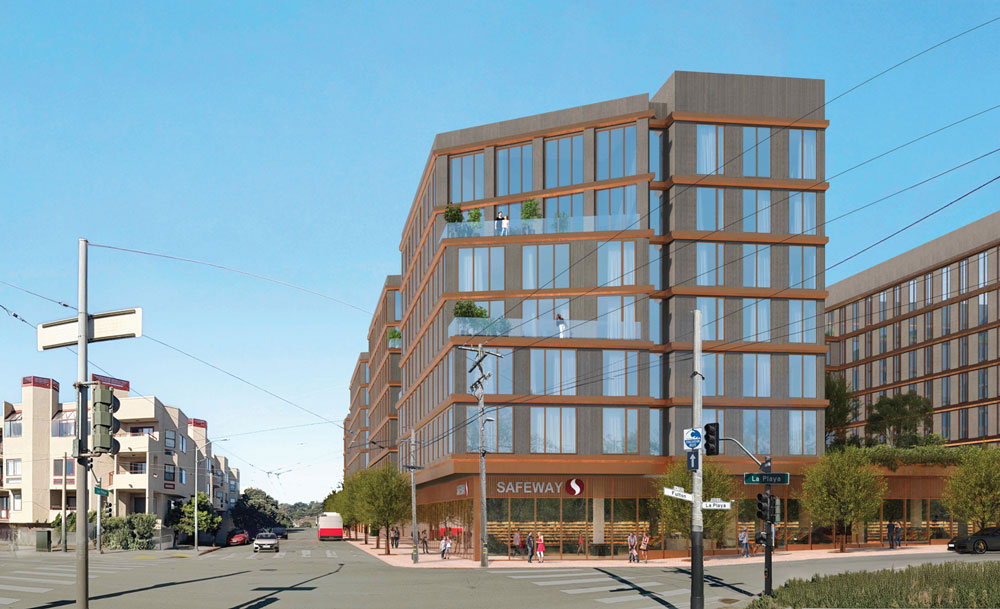
Coastal Commission Opens Ocean Beach to High-Rise Development.
A 10–1 vote clears the way for taller market-rate housing near San Francisco’s western shoreline — and raises a blunt question: who is the coast being protected for?

• • • • • • • • • • May 2026 • • • • • • • • • •
“I love San Francisco. That’s why it’s so hard to watch real estate speculators buy up properties, drive up prices, and push people out, and turn a profit from the displacement of my neighbors. In San Francisco, every time a billionaire wins, San Francisco loses a piece of what makes it special.” — Dean Preston (former San Francisco Supervisor).
A Coastal Vote That Redraws the Westside Skyline
In an abandonment of their responsibility to protect the coast, the California Coastal Commission (CCC) voted 10 to 1 to approve high-rise, market-rate, residential buildings on the coast in the Outer Richmond and Outer Sunset. Eleven commissioners voted, but there was only one — Ray Jackson — who questioned the assumptions made by the City and the CCC staff.
You can see the full proceedings on the CCC website video from Thursday, April 16th, beginning about the 3 hr 30 min mark. The quotes in this article are from the transcript.
‘Important Opportunity Sites’ — Or Prime Real Estate for Luxury Towers?
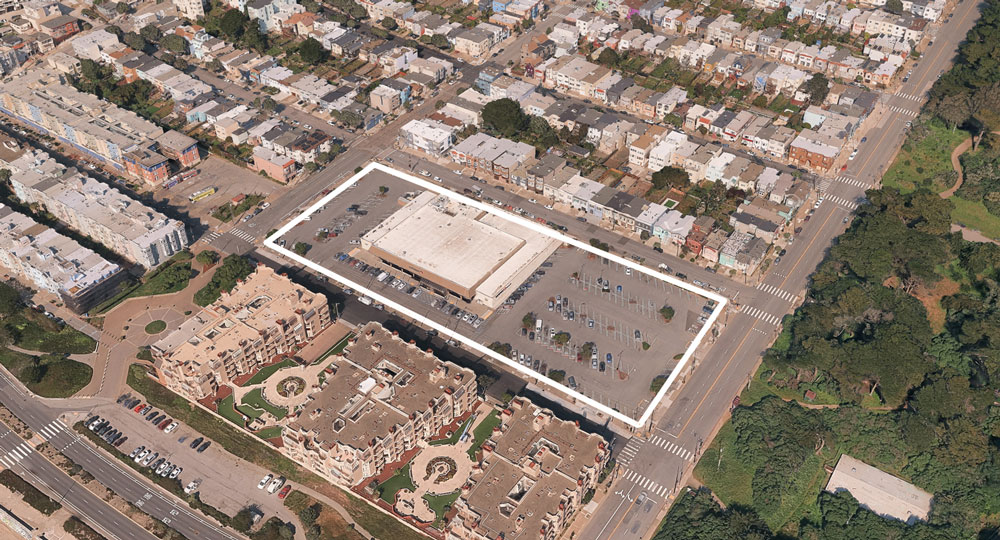
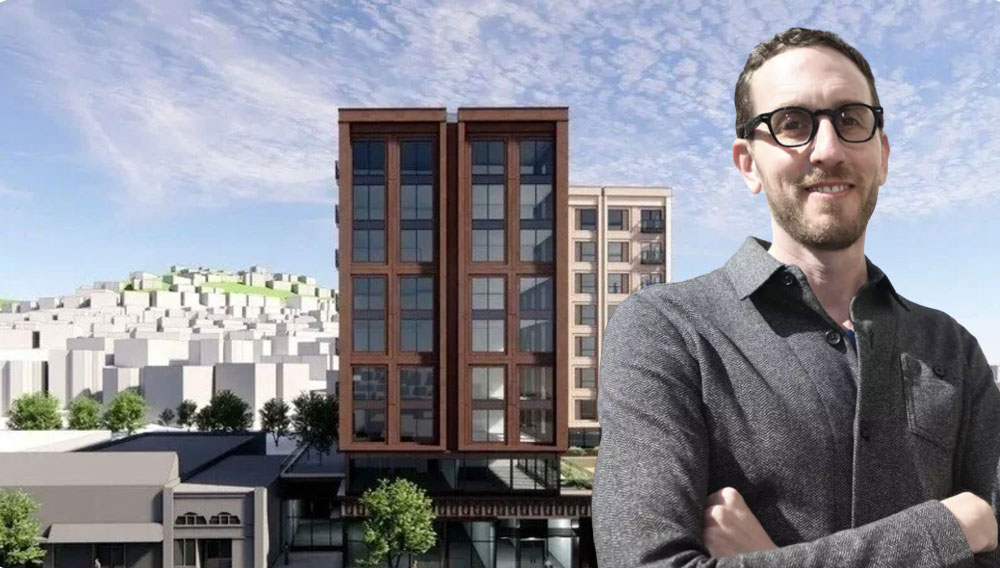
The City asked for an amendment to the Local Coastal Plan (LCP) to allow developers to build 8- or even 12-story buildings near Ocean Beach. The City claims this is needed to respond to the Regional Housing Needs Allocation imposed by Sacramento, thanks to State Senator Scott Wiener.
According to the presentation given to the CCC, ‘The City and county of San Francisco Local Coastal Plan amendment proposes changes to both the LCP’s land use plan and implementation plan intended to facilitate infill residential development with an emphasis on transit-oriented development and affordable housing.’
The presentation continues, ‘...the city considers these areas to be ‘important opportunity sites’ for additional infill housing and the proposed amendment is intended to facilitate such development.’
Important opportunity sites? What is that? I think it means a site where real estate developers can get top dollar for luxury units with ocean views. Never mind the neighborhood or the local residents — there’s money to be made.
From ‘Protected Neighborhood’ to Development Free-For-All
It wasn’t too long ago that former Supervisor Joel Engardio and Sunset Dunes supporters were loudly proclaiming that local zoning laws would protect the Sunset from high-rise development along Sunset Dunes. That protection was gone in a puff of smoke thanks to the collusion between the City and the CCC staff.
An ‘Infomercial’ for Upzoning
The CCC staff presentation to the Commission was like an infomercial in favor of the City’s plan. Deputy Director Joshua Switzky began by thanking staff ‘who have been diligently — spent very many months, working with us…’ to bring the amendment forward.
In short, much of what the CCC staff report presents are opinions and generalizations that critics argue give developers a free hand to build market-rate housing, displace long-term residents, and gentrify the coastal zone.

Only 13% of the proposed development at 850 La Playa is reserved for affordable housing, with incremental increases tied to building height. Critics point to studies suggesting that increases in market-rate density do not necessarily translate into improved affordability.”
850 La Playa: Minimal Affordability, Maximum Impact
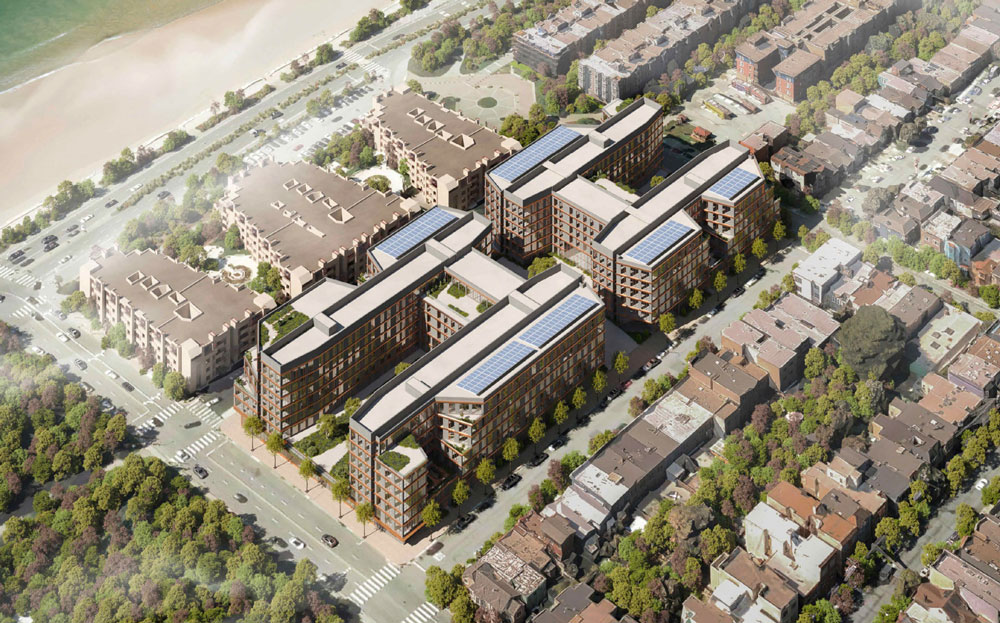
How is it that our coastline has suddenly been reduced to an ‘important opportunity site’ for high-rise development? A development that will do nothing to solve the affordable housing crisis — and may, in fact, make it worse.
Only 13% of the proposed development at 850 La Playa is reserved for affordable housing, with incremental increases tied to building height. Critics point to studies suggesting that increases in market-rate density do not necessarily translate into improved affordability.
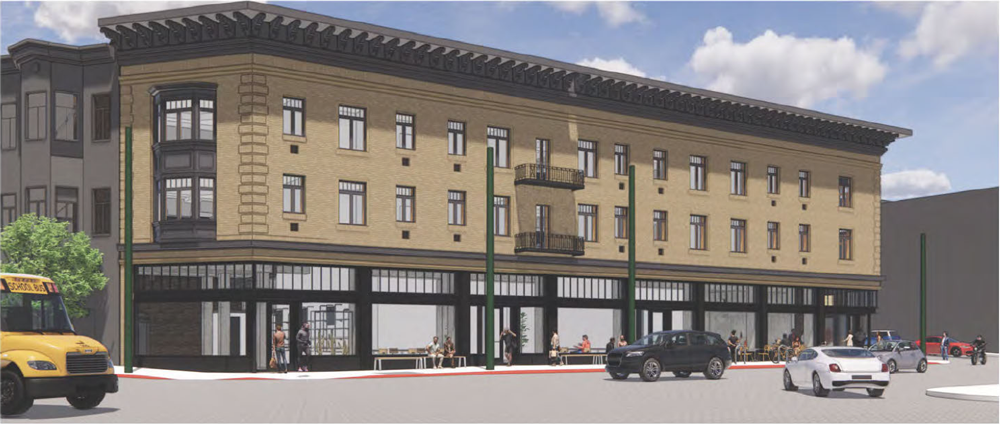
The proposed project — two 8-story towers totaling 526 units at the Safeway site — has become a flashpoint in the broader housing debate.
Economists Challenge the ‘Build More’ Narrative
As one local observer put it, new buildings may be ‘simply out of scale — sticking up like sore thumbs — in the neighborhoods that must tolerate them,’ while including only the minimum required affordable units.
Meanwhile, academic research cited by critics suggests that rising housing costs are driven more by inequality and capital flows than by zoning constraints alone.
‘Densely Developed’? Residents Say Otherwise
The CCC staff argues that the coastal zone is already ‘fairly densely developed,’ but critics counter that the area is overwhelmingly composed of two- and three-story buildings — not an urban skyline.
They further challenge claims that taller buildings would be ‘generally compatible’ with neighborhood character or that impacts on public views and coastal access would be minimal.
One Block from the Ocean — And ‘Generally Inland’?
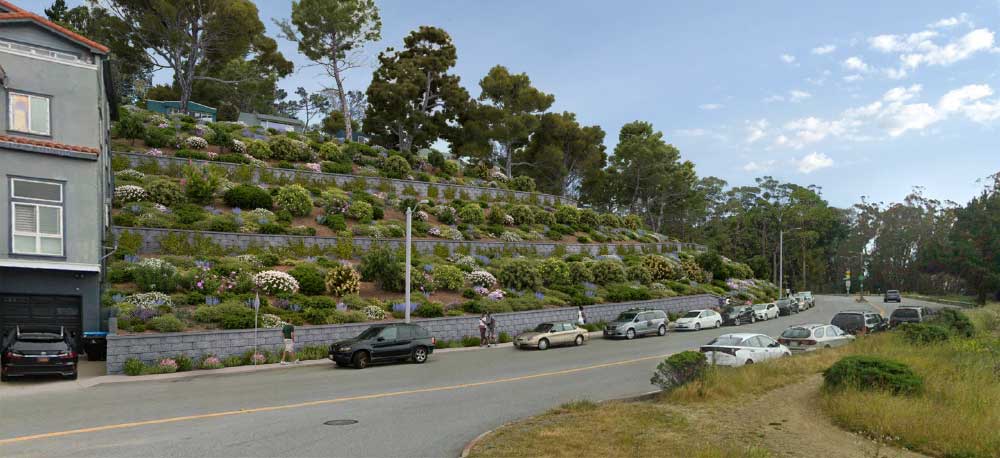
The proposed development at 850 La Playa would introduce more than 1,000 new residents to a currently uninhabited block — raising concerns about impacts on Ocean Beach, Golden Gate Park, and nearby habitat areas.
‘Generally inland,’ critics argue, is an elastic phrase — especially when the project site sits just one block from the ocean.
Buzzwords vs. Reality
The staff report concludes with references to ‘affirmatively furthering fair housing’ and ‘climate responsible smart growth’ — language that skeptics say obscures more than it clarifies.
In part 2 of this article, I’ll talk about the Commissioners’ responses.
David Romano is an environmental activist living near Ocean Beach
May 2026