Congestion Pricing Won’t Work for Downtown SF
Let’s Rethink the Problem
• • • • • • • • June 2025 • • • • • • • •
On the heels of its implementation in New York City, SFMTA has renewed interest in congestion pricing in downtown San Francisco. Advocates claim it will close the funding gap in SFMTA, aid in downtown recovery, and reduce pollution and congestion. However, while it is too early to come to any conclusion about its success in New York City, it is definitely the wrong move for San Francisco.
New York City has implemented congestion pricing in Manhattan south of 60th Street. The area covered is about 2 miles wide and 5 miles long, with limited entry points through bridges and one-way streets crossing 60th Street. The logistics of implementation are more difficult in San Francisco, whose proposed congestion pricing would encompass an area approximately bounded by Laguna Street, 18th Street, and the shoreline, with many more points of entry.

Every entrance would require a toll collection gantry. These are not an insignificant cost, and the proposed area for congestion pricing in San Francisco would require many more toll collection points than Manhattan.”
Every entrance would require a toll collection gantry. These are not insignificant costs, and the proposed area for congestion pricing in San Francisco would require many more toll collection points. The administration of such a program would likely require a whole new section within SFMTA with additional bureaucrats, each with salary, benefits, and pension.
SFMTA is in severe deficit and already too massive; further increasing its size is not smart governance. Repairing and maintaining toll collection gantries would also be a recurring cost that would likely cost millions of dollars yearly. The total cost of implementing congestion pricing would likely consume a significant portion of the revenue collected to the extent that the implementation costs would exceed the benefit.
Downtown has long been the economic engine for San Francisco, generating much of our revenue. However, since COVID, San Francisco has had the slowest downtown recovery of any major American city. Walk on Market Street or near Union Square to see the number of empty offices and storefronts. At a time when downtown is empty and property values are tumbling, increased expenses for visitors would only accelerate the loss of business downtown and drive customers to shop at other locations such as Stonestown, Serramonte, Marin, or Santana Row. The second and third-order effects of this would cause vacancies to rise, valuations of properties to fall even further, and a reduction of tax revenue collected, leading to further cuts in city services. This could more than offset any revenue collected by congestion pricing.
The transit density of Manhattan is more robust than San Francisco. While the proposed congestion pricing zone of San Francisco has the Market Street subway (a trunked system in which multiple MUNI and BART lines converge) and the Central Subway (a short subway that goes to Chinatown), Manhattan has several high-volume subway routes for transit redundancy. While proponents claim that revenue will fund improved service, such large-scale projects like subway expansions are expensive and optimistically will take 10 years to complete at a minimum. Bus adjustments, while easier, still provide a relatively low quality of service compared to grade-separated rail transit that will unlikely entice customers out of their personal vehicles.
Even bus rapid transit projects such as Van Ness BRT took several years to complete and were extremely disruptive to the commercial corridor and likely forced several businesses to close.
SFMTA has never seriously tried to reign in its spending and control its expansion. It delayed several cost-saving decisions, hoping that the state and federal government would always be there to rescue it. Now, it faces its most serious fiscal crisis yet and wants residents, commuters, and visitors to bail it out. It promises better service but rarely delivers. Adding more expenses to already overburdened San Franciscans, pushing visitors away, and adding bureaucracy is not the solution to SFMTA’s problems.
SFMTA’s actions have been a significant cause of congestion in San Francisco. They need to reverse course and stop ideologically driven urban planning that exacerbates congestion and fails to achieve their goals. It’s time to end this congestion pricing idea once and for all.
Our downtown is the most significant driver of our city’s economy. At a time when our downtown is struggling, we need to do whatever we can to aid in its recovery. Congestion pricing would stand in the way of our recovery. The public already rejected the idea in 2021 when I was part of the SFCTA Congestion Pricing working group. It is time to stop forcing ideas on a public that does not want them for some unproven benefit.
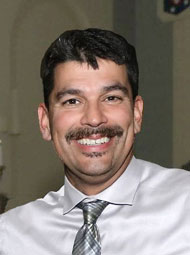
Stephen Martin-Pintowas the West of Twin Peaks Central Council representative to the SFCTA Congestion Pricing Working Group in 2019. He has served on the board of West of Twin Peaks Central Council, Sunnyside Neighborhood Association, the Veteran Affairs Commission, and was a candidate for District 7 Supervisor, and is a firefighter for San Francisco.
June 2025