Why I’m overlooking her Shortcomings ...
The Case for Supervisor Melgar — and Why We Shouldn’t Recall Her
• • • • • • November 2025 • • • • • •

Since Supervisor Joel Engardio was recalled in September, many District Seven residents are starting to consider Supervisor Myrna Melgar the next target.
Closing the Great Highway
Engardio was mostly recalled over Proposition K. Still, five supervisors (Joel Engardio, Myrna Melgar, Dean Preston, Rafael Mandelman, and Matt Dorsey) put Proposition K on the 2024 ballot after a popular pandemic-era pilot program banning cars transformed the highway at the beach temporarily into a public space. Then Proposition K — closing the Great Highway between Lincoln and Sloat and turning it into a public park — won the vote of San Franciscans.
While Engardio took credit for Proposition K’s passage, Myrna Melgar stayed in the shadows.
Melgar is much smarter than Engardio. He played checkers while she plays chess. Engardio’s ultimate downfall came because he wanted to please Scott Wiener, Mayor Lurie, Yimby management, lobbyist Todd David (Wiener’s ex- political Director), and Lucas Lux, a San Francisco-based attorney/lobbyist serving as Senior Counsel for Google Cloud. Lux is active in local advocacy, as President of Friends of Ocean Beach Park and Treasurer of the San Francisco Bicycle Coalition.
None of them will answer or return Engardio’s phone calls in a month.
Conversely, Melgar made a few appearances and kept quiet about Proposition K.
What People are saying
“Supervisor Melgar doesn’t reflect District 7’s values — full stop,” D7 resident David Caudro said, “we opposed closing the Great Highway; she backed it. We recalled Boudin; she supported him. We want middle-class housing and modern transit; she pushes bike lanes. Her policies are anti-family. On issue after issue, she’s at odds with her own constituents. She doesn’t represent us.”
The San Francisco Daily Standard reported, in a September 19 article, “We do think the recall in District 4 has galvanized the [District 7] electorate,” Deidre Von Rock, President of the West Portal Merchants Association, said. “[Melgar] does not listen to us.”
Further, “many constituents have taken issue with Melgar’s policy positions on housing, zoning, and transportation.”
“She’s totally erased … West Portal from her constituency,” said Karen Tarantola, President of the Greater West Portal Neighborhood Association. “It’s very frustrating. We’re not being represented, period.” These fundamental arguments about Melgar seem widespread.
Who is she and who does she represent?
Melgar already had an impressive resume. She was the President of the Planning Commission. According to the San Francisco Chronicle, January 2020, “Melgar, a self-described ‘planning nerd,’ has worked on the commission for 3½ years, during which she’s cultivated a reputation as an amenable, even- keeled voice on the often-divisive body.”
According to Supervisor Melgar, “I ran as a progressive both in 2020 and in 2024. The difference is that in 2020, there was a candidate who identified as more progressive than me (Vilaska Nguyen) but I have not identified as a moderate, although I am not ideological like other folks in this town - on this board I am considered the center between the progressives and the moderates. I was also endorsed by the Yimbys in both 2020 and 2024. I was endorsed by the DCCC (Democratic County Central Committee) when it was under progressive control in 2020 and again when it was under moderate control in 2024.”
San Francisco’s District 7 is known for having a moderate political lean, though recent redistricting has added more progressive neighborhoods. For many years, it was considered one of the most moderate and even conservative-leaning areas in the city.
Myrna Melgar was elected to the Board of Supervisors representing District 7 in 2020 and re-elected in 2024. Ironically, she beat Joel Engardio in 2020.
Is Myrna Melgar representing the people who live in D7?
The hard-working D7 residents — who pay for daycare, pay their mortgages, and property taxes — are starting to wake up after watching D4 Supervisor Joel Engardio’s recall. When San Francisco politicians stop representing the people who elect them, they should be scrutinized by their constituents. That is a minimum.
Scott Wiener and the Yimbys call areas with predominantly single-occupancy homes the “wealthy districts.” But the residents of the Westside are not wealthy.
Regarding the budget she states, “I helped negotiate budget deals that preserved our Participatory Budget (PB) for D7 and also secured funding for: a new ramp for the Pomeroy Center, funding for senior programs at the YMCA, funding for youth services at City Youth Now, funding for the Armenian Food Festival, funding for the graffiti abatement program, funding for the community ambassadors on West Portal and Irving Street, funding for the Community Connectors program of the Community Living Campaign, funding for community events on Ocean Ave (the Lunar New Year celebration, Juneteenth), funding for capacity building for the Ocean Avenue Association, funding for the formation of Lakeside Landing, and funding for the Inner Sunset Flea Market.” She should be commended for her hard work on behalf of D7.

D7 resident David Caudro said, “we opposed closing the Great Highway; she backed it. We recalled Boudin; she supported him. We want middle-class housing and modern transit; she pushes bike lanes. Her policies are anti-family. On issue after issue, she’s at odds with her own constituents. She doesn’t represent us.”
Melgar is a clever politician. She is currently Chair of the Board of Supervisors’ (BOS) Land Use and Transportation Committee. That was no accident. Melgar had promised to vote for one specific Supervisor for President of the Board — she was the 6th vote out of eleven votes. She acquired the Chair position by changing her promised vote in 2020 for BOS President to Shamann Walton. When Walton promised her the Chair of the Land Use and Transportation Committee, she switched votes, and Walton became BOS president. She is very resourceful at promoting her own interests.
When Melgar answered the The Harvey Milk LGBTQ Democratic Club Questionaire for November 2020: She stated the following priorities:
- Creating Affordable Housing
- Transportation: Ensure that the SFCTA includes the Westside in the long-term planning, particularly along transit corridors and where development is expected like the Balboa station, the M stop in front of SFSU and Stonestown.
- “I furthermore support disbanding the SFPD and requiring officers to reapply to a newly constructed, less violent police force.”
“I have a system for endorsements of other candidates and this is it: I will support the most progressive candidate always, except if that candidate is a cis hetero white man, in which case I will instead support in this order, the most progressive: Black man, Black woman, Person of Color, Gay person, Woman. If a cis hetero white progressive man is running against any of the above or a white cis hetero woman, I will make no endorsement. “ Thus, a progressive, gay, black man would be a perfect candidate.
Traffic: A Trip Down Candy Cane Lane
Melgar is also Chair of the San Francisco County Transportation Authority (SFCTA) and is responsible for leading that governing board, which is composed of the 11 members of the San Francisco Board of Supervisors. She is currently Chair, and the Vice-Chair is Danny Sauter. The SFCTA is distinct from the San Francisco Municipal Transportation Agency (SFMTA), which manages public transit (Muni), taxis, and parking.
The SFCTA’s mission is to make travel safer, healthier, and easier for EVERYONE (Melgar) who, some say, wants to get rid of cars — not some cars, but all cars) — in San Francisco. The SFCTA’s responsibilities include planning, funding, delivering local and regional transportation projects, and administering the Proposition L transportation sales taxes ($2.6B over thirty years) that allow the issuance of revenue bonds dedicated to transportation.
The Board of Supervisors unanimously passed the “Street Safety Act” on September 16, authored by Myrna Melgar with six co-sponsors. The plan will replace our failed “Vision Zero” initiative, which sought to eliminate traffic deaths by 2025.
While it gives every politician involved a way to show how concerned they are with “public safety, they should have shown better judgment before passing that resolution.”
Now, San Francisco will have to take $34M out of the road repair fund for Slow Streets, quick builds, polka dot crosswalks, traffic neckdowns, bulb-outs, daylighting, bike lanes etc. The Committee should develop plans that do not congest traffic.
Under the provisions of AB 43 that came into effect in January 2022, the SFMTA is reducing speeds by 5 mph (from 25 mph to 20 mph, or 30 mph to 25 mph) in all business activity districts (streets where at least half of the property uses are dining or retail). As of September 2024, 79 corridors and 48.5 street miles have implemented the reduction in business activity districts.
Melgar never understood that speeding is only a symptom; it’s not the real cause of many of San Francisco’s accidents.
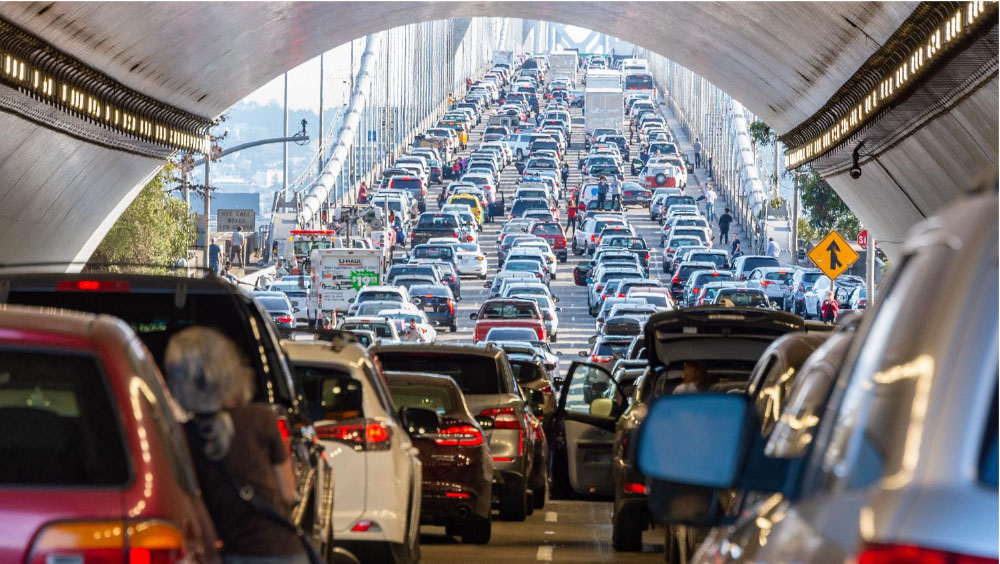
The average traffic speed in San Francisco is 14 mph, according to 2024 data from TomTom, making San Francisco the second slowest major U.S. city for drivers. This low average speed indicates that it takes drivers approximately 32% longer to cover a mile than in free-flowing traffic.
San Francisco traffic congestion peaked last year from August through October, when trips took as much as 35% longer than they would without traffic. This high rate of congestion is why 43 people were killed last year in San Francisco — a record number of deaths.
The April 23rd Budget and Legislative Analyst Report
Supervisor Myrna Melgar paid absolutely no attention to the April 24 Budget and Legislative Analyst’s (BLA) report (that she commissioned) regarding congestion. The report raises questions about the quality of her work with the Land Use and Transportation Committee, SFCTA, BOS, and now the Public Safety and Neighborhood Services Committee. Consider the following excerpt regarding “congestion” in the (BLA) report.
In a 2019 meta-analysis from the University of Adelaide, 9 out of 11 studies reviewed found a positive relationship between congestion and collisions. Two of the studies reviewed did not come to this conclusion. A 2021 study from the University of Barcelona analyzed data from 129 European cities from 2008 through 2017 and found a concave relationship between congestion and traffic deaths. In the study, fatalities decreased until travel times increased by approximately 30% compared to the free-flow situation. At that point, they increased.
CONGESTION is the leading cause of traffic accidents/deaths in San Francisco — not speeding. Many of our City streets average less than 4.5mph. However, while traffic increases in public transit ridership. The three main Bay Area transit agencies — Caltrain, BART and Muni — are still significantly trailing pre-pandemic ridership levels, which has left them in a drastic financial hole. The average SFMTA bus averages 6 mph.
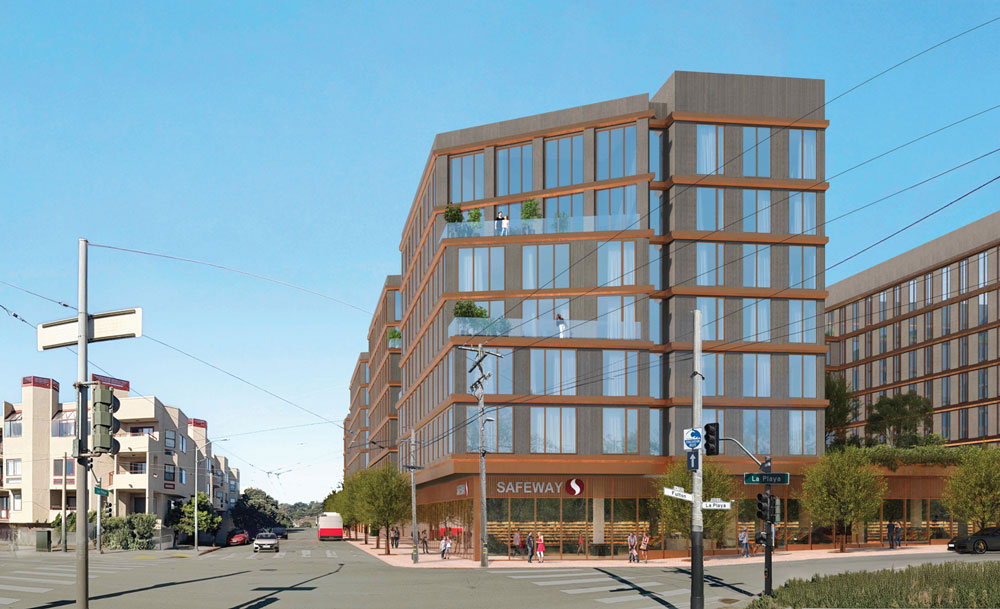
Although the State has dictated its housing goals to San Francisco, Melgar is one of the few Supervisors who have not accepted the Mayor’s Family Zoning Plan without amendments. Lurie’s plan will eventually pass, but not before adding several of Melgar’s amendments on rent-controlled buildings, small business funding, and demolitions.
According to Melgar, “The proposed map for the upzoning plan still needs more work. We need to show the state zone capacity for more units consistent with our commitment to the Housing Element. However, it needs to be consistent with other parts of the Housing Element, for example, adding housing on commercial and transit corridors, and underutilized land. I look forward to seeing the next draft before considering scheduling it at the Land Use Committee.”
Melar states, “ I also want to acknowledge the ongoing conversations on the Mayor’s Family Zoning Plan that you may have heard about in your neighborhood. While I agree that the Westside needs to build more housing, I believe there is still work to be done to ensure that this progress includes tenants, small businesses, and affordable housing.”
Once again, a shrewd politician. Melgar hasn’t yet committed to the Mayor’s Family Zoning Plan. Melgar has the uncanny ability to stay relevant by remaining a powerful, central vote. Eventually, she will have to commit, but in the interim, she is negotiating successfully to prevent the displacement of residents and small businesses.
I will pass on the Enhanced Infrastructure Financing District (EIFD) caper — the latest incarnation of the Redevelopment Agency — for now. “What we have passed is only a resolution of interest,” she said, “and we have not specified the uses for the EIFD other than affordable housing, but it does not preclude any other uses or a hierarchy of uses.” In a later report, I will explore the uses, other uses, and ensuing hierarchy.” Legistar, File number 250790. Melgar is the sponsor. As 250790 progresses it will have a huge impact on District 7.
Let’s Keep Myrna As Our D7 Supervisor Anyway
Supervisor Myrna Melgar may be misunderstood or disliked by some constituents, but her political capacity and her ability to control a situation is unique in San Francisco. We may never know who she is, but she is certainly capable.
George Wooding
George Wooding, Neighborhood Activist Emeritus
November 2025